
ATTORNEY STEVE® – CALL US IF YOU NEED HELP WITH COPYRIGHT, CONSENT DEFENSES, OR INTELLECTUAL PROPERTY DISPUTES – (877) 276-5084
INTRODUCTION
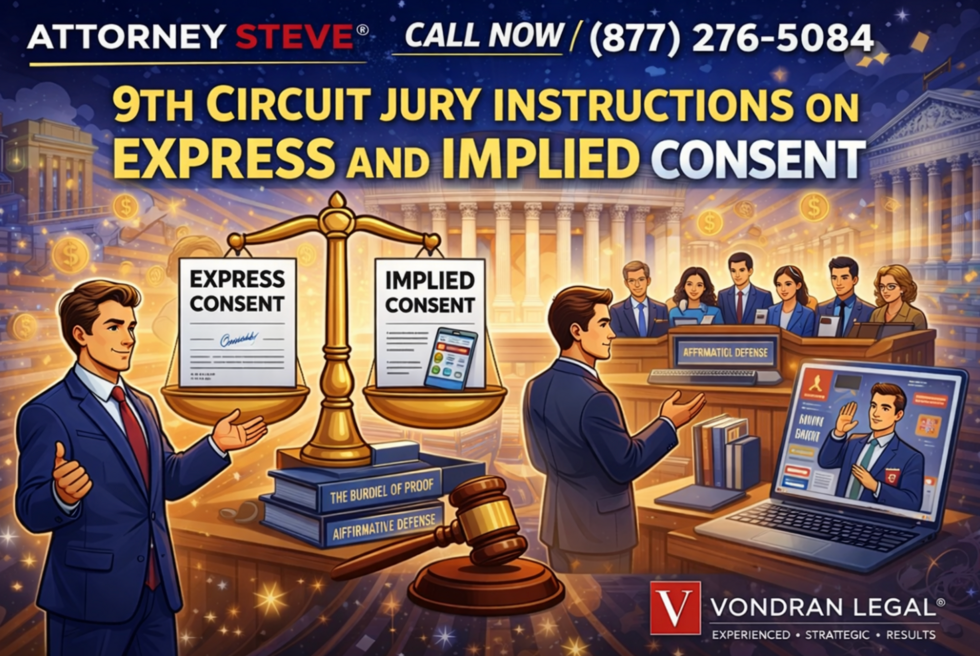
Consent can be a complete defense in copyright, right of publicity, and related intellectual property disputes. In the Ninth Circuit, courts rely on model jury instructions to guide how juries determine whether a defendant had authorization to use protected content.
These instructions recognize both express consent and implied consent, often framed as an implied license, but they are evaluated differently and frequently turn on fact-intensive inquiries. In many cases, the outcome depends on how a jury interprets conduct, intent, and scope.
THE NINTH CIRCUIT APPROACH TO CONSENT
Under Ninth Circuit law, a defendant may avoid liability by proving that the plaintiff authorized the use at issue. This is treated as anaffirmative defense, meaning the burden falls on the defendant.
At a high level, the jury is asked to determine:
- Whether permission was granted, either expressly or through conduct
- What the parties intended based on words and behavior
- Whether the challenged use stayed within the scope of that permission
This framework is what drives most consent-based disputes at trial.
EXPRESS CONSENT
Express consent involves clear, affirmative permission, such as a written agreement, email authorization, or verbal approval with defined terms.
In practice, the dispute is rarely about whether consent existed at all. The real issue is usually scope. Even where permission is undisputed, the jury must decide whether the defendant's use stayed within what was actually authorized. Informal or vague agreements often create ambiguity that becomes central in litigation.
IMPLIED CONSENT AND IMPLIED LICENSES
The Ninth Circuit also recognizes implied consent, typically analyzed as an implied license. This arises not from explicit permission, but from conduct and surrounding circumstances.
Courts in this circuit generally look to whether:
- The plaintiff created or provided the work
- The plaintiff intended that the work be used
- The defendant relied on that conduct in using the work
Because this analysis is based on inferred intent rather than clear agreement, it is inherently less predictable. Implied consent often depends on course of dealing, industry practice, and whether prior uses occurred without objection. For that reason, these cases frequently turn into jury questions.
SCOPE OF CONSENT IS OFTEN THE DECIDING ISSUE
A key point under Ninth Circuit law is that consent is not unlimited. The defense only applies to uses that fall within the scope of authorization.
Courts and juries commonly examine:
- Whether the use shifted from non-commercial to commercial
- Whether distribution was expanded beyond what was contemplated
- Whether the content was used in a materially different context
A limited permission does not grant a blanket right. Exceeding scope is often where liability arises.
WHY THESE CASES FREQUENTLY GO TO TRIAL
Consent defenses, especially implied license arguments, are highly fact-driven. Courts are often reluctant to resolve them early because they depend on credibility, intent, and competing narratives.
As a result:
- Summary judgment is often denied
- Juries are asked to weigh the evidence
- Outcomes can hinge on how conduct is interpreted
This creates both risk and strategic leverage in litigation.
PRACTICAL IMPLICATIONS
These issues arise frequently in modern content use, including social media, influencer collaborations, and film or documentary production. Parties often operate informally, assuming permission exists without clearly defining it.
That assumption can become problematic when disputes arise, particularly when expectations differ between the parties.
BEST PRACTICES
From a risk management perspective, clarity is critical. The most effective way to avoid disputes is to reduce ambiguity at the outset.
In particular:
- Use written agreements whenever possible
- Clearly define scope, duration, and permitted uses
- Avoid relying on silence or informal understandings
- Keep records of communications that may reflect intent
These steps can significantly strengthen a consent defense or prevent disputes altogether.
HOW VONDRAN LEGAL® HELPS WITH CONSENT AND COPYRIGHT DISPUTES
Vondran Legal® has extensive experience handling copyright and intellectual property disputes, including cases involving express and implied consent.
Our firm assists clients with:
- Evaluating consent and implied license defenses under Ninth Circuit law
- Drafting and negotiating licenses and releases
- Responding to infringement claims and demand letters
- Litigating disputes involving scope of authorization
- Advising on compliance strategies for digital content use
Early legal analysis can often determine whether a viable defense exists and reduce potential exposure.
CONTACT A CALIFORNIA INTELLECTUAL PROPERTY ATTORNEY
Since 2004, Vondran Legal® has been a leader in copyright and trademark infringement matters in the United States. We have handled over 1,000 copyright and DMCA cases, including fair use opinions, enforcement actions, federal litigation, and platform disputes involving YouTube, Amazon, TikTok, and online creators.
If you are facing a dispute involving consent, licensing, or unauthorized use of content, we are available to assist.

