
Vondran Legal® Trademark College® - The Roberto Clemente Supreme Court Case That Could Change Intellectual Property Law
By Attorney Steve® | Vondran Legal®
Can the Government Use Your Trademark Without Paying You?
Most business owners assume that if someone uses their trademark without permission, they can file a trademark infringement lawsuit under the Lanham Act. But what happens when the alleged infringer is the government itself?
That question is now before the United States Supreme Court in a fascinating petition involving the estate of baseball legend Roberto Clemente.
The case asks a constitutional question with potentially enormous implications:
Does the Fifth Amendment protect trademarks and other intellectual property the same way it protects land, buildings, and other tangible property?
If the Supreme Court agrees to hear the case—and ultimately sides with the Clemente family—it could reshape constitutional protections for trademarks, copyrights, patents, trade secrets, and perhaps even certain AI-related disputes.
Let's break it down.
Who Was Roberto Clemente?
Roberto Clemente was far more than a Hall of Fame baseball player.
A Pittsburgh Pirates legend, Clemente collected exactly 3,000 career hits, won multiple Gold Gloves, captured a World Series MVP award, and became one of baseball's greatest humanitarian figures. Tragically, he died in 1972 while delivering earthquake relief supplies to Nicaragua.
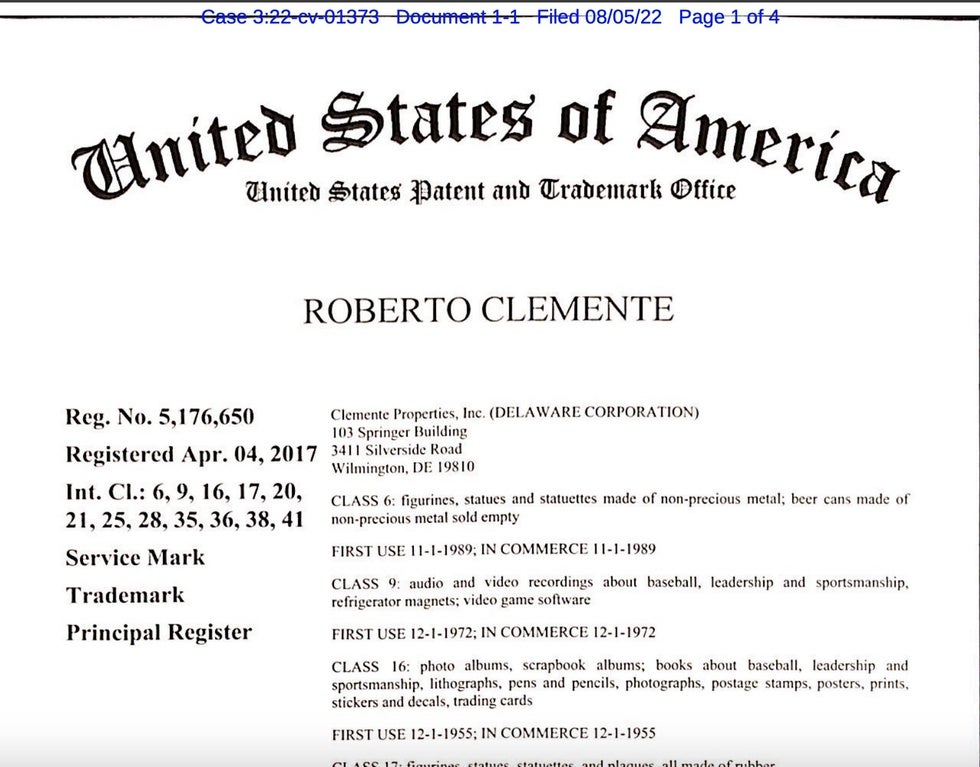
For decades, his family has worked diligently to preserve his legacy through licensing, charitable organizations, museums, educational initiatives, and federal trademark protection.
Like many celebrity estates, the Roberto Clemente name represents valuable intellectual property.
What Happened?
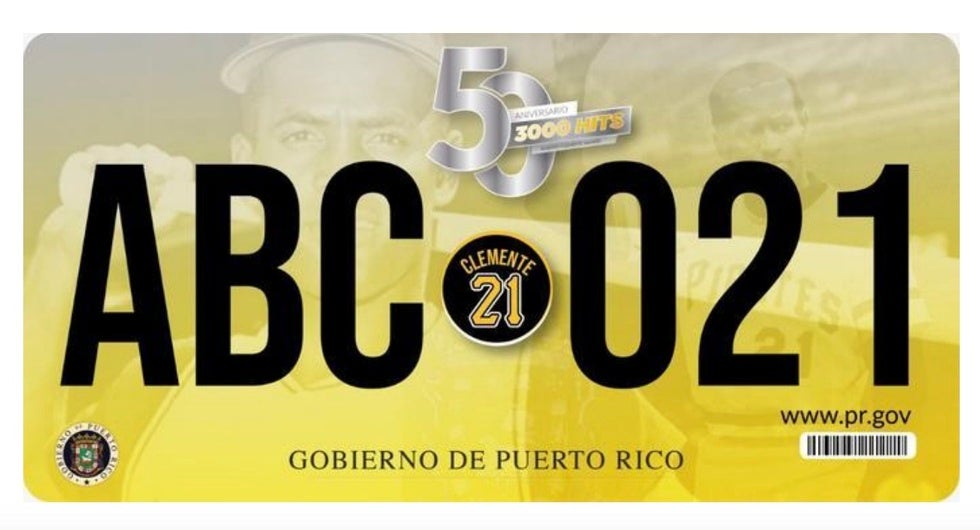
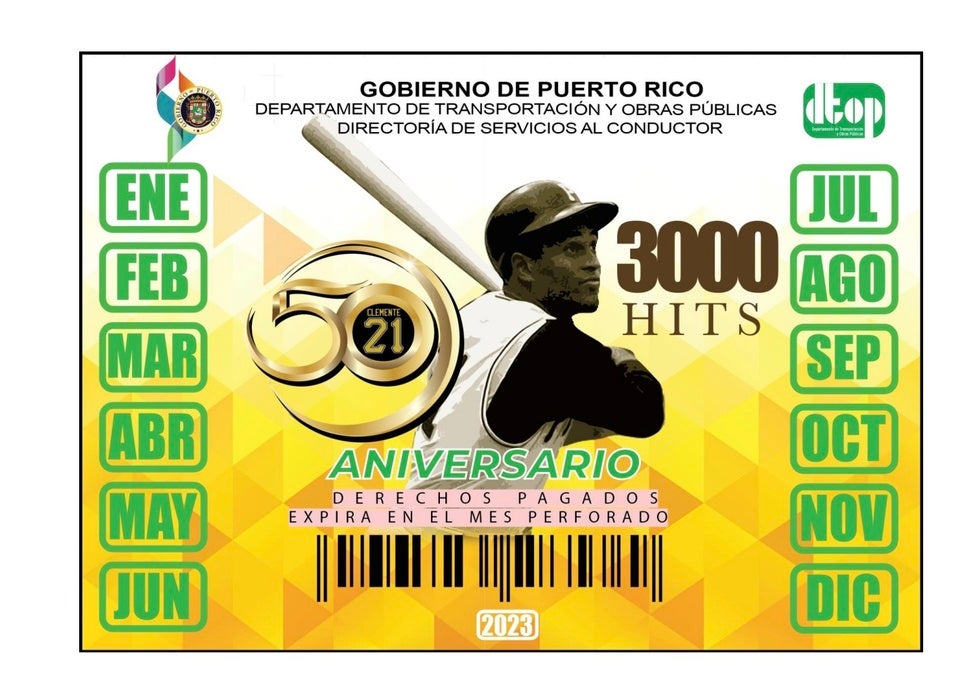
According to the petition filed with the U.S. Supreme Court, Puerto Rico enacted legislation authorizing commemorative license plates and vehicle registration tags bearing Roberto Clemente's name, image, and related branding.
The petition alleges that:
-
Puerto Rico generated approximately $15 million through the program.
-
The government never obtained permission from the Clemente family.
-
The family received no compensation.
-
Members of the public mistakenly believed the Clemente family was benefiting financially from mandatory government fees.
-
The unauthorized use damaged the goodwill associated with the Roberto Clemente brand.
The Clemente family sued, asserting multiple claims, including:
-
Fifth Amendment Takings Clause
-
Lanham Act trademark claims
-
Related causes of action
The Constitutional Question
The Fifth Amendment provides:
"...nor shall private property be taken for public use, without just compensation."
Notice something important?
The Constitution doesn't distinguish between:
-
real property
-
personal property
-
tangible property
-
intellectual property
It simply says:
private property.
The Clemente family argues that trademarks unquestionably qualify as property.
If government appropriates private property for public use, the Constitution generally requires payment of just compensation.
So why should trademarks be treated differently?
The First Circuit Said "Not So Fast"
The United States Court of Appeals for the First Circuit agreed that trademarks are a form of property.
However, the court concluded that intellectual property should not automatically receive the same "per se" takings protection traditionally afforded to physical property.
Why?
Because trademarks are intangible.
The court reasoned that government use of a trademark does not dispossess the owner in the same way government occupation of land or buildings does.
Instead, the court viewed trademark appropriation through the more flexible framework typically used for regulatory takings rather than the automatic compensation rules applied in classic physical takings cases.
That distinction lies at the heart of the Supreme Court petition.
Why This Could Become a Landmark Intellectual Property Case
This case extends far beyond Roberto Clemente.
If the Supreme Court recognizes that trademarks receive the same constitutional protection as physical property, the decision could significantly affect numerous areas of intellectual property law.
Trademarks
Government agencies could face constitutional takings claims when they appropriate private brands, logos, names, or goodwill.
Copyrights
Although copyright law presents different legal questions, litigants may attempt to extend similar constitutional reasoning to unauthorized governmental copying.
Patents
Patent owners could point to broader constitutional protections for intangible property interests.
Trade Secrets
The Supreme Court has previously recognized that trade secrets can constitute property protected by the Fifth Amendment, making this case especially significant for businesses that rely on proprietary information.
Name, Image, and Likeness (NIL)
Professional athletes, celebrities, entertainers, and influencers increasingly monetize their names and likenesses.
This case could influence future disputes involving governmental use of celebrity branding.
Artificial Intelligence
Although AI is not directly at issue, future cases could ask whether government use of copyrighted works, trademarks, or proprietary datasets for AI training implicates constitutional property protections.
Those questions remain unresolved, but this case may provide important groundwork.
Why the Right to Exclude Matters
One recurring theme throughout modern property law is the right to exclude others.
The Supreme Court has repeatedly described the right to exclude as one of the fundamental characteristics of property ownership.
Trademark law is built upon that principle.
A trademark owner possesses the exclusive right to use the mark in commerce and to prevent unauthorized uses that create confusion or dilute goodwill.
The Clemente petition argues that when government appropriates that exclusive right for its own benefit, it has effectively taken a core property interest.
That argument draws heavily from prior Supreme Court property rights decisions, including:
-
Horne v. Department of Agriculture
-
Cedar Point Nursery v. Hassid
-
Ruckelshaus v. Monsanto Co.
Whether those precedents extend to trademarks remains one of the central questions presented.
The Second Big Issue: Can Puerto Rico Claim Sovereign Immunity?
The petition also asks another important constitutional question.
Can Puerto Rico invoke sovereign immunity to avoid Lanham Act claims?
The petition argues that Puerto Rico occupies a unique constitutional status as a territory rather than a state and questions whether it should receive the same immunity protections traditionally afforded to states.
That issue could have significant implications for future litigation involving Puerto Rico and federal statutes.
Will the Supreme Court Hear the Case?
No one knows.
The Supreme Court receives thousands of petitions each year and grants review in only a small percentage of cases.
Factors favoring review include:
-
Important constitutional issues
-
Intellectual property implications
-
Government takings
-
Sovereign immunity questions
-
Nationwide importance
Whether the Court grants certiorari remains to be seen.
Bonus Materials: Click here to review the writ of certiorari filed in this case.
Practical Lessons for Businesses and Brand Owners
Regardless of how the Supreme Court rules, this case offers several important reminders.
Register your trademarks.
Federal registration provides significant legal advantages when protecting valuable brands.
Actively police unauthorized uses.
Failing to enforce trademark rights can weaken a brand over time.
Protect goodwill.
A trademark is much more than a logo.
It represents years—sometimes decades—of reputation, customer trust, and commercial value.
Government disputes are different.
Claims against governmental entities often involve sovereign immunity, constitutional issues, and specialized procedural requirements that differ substantially from ordinary infringement cases.
How Vondran Legal Can Help
At Vondran Legal, we represent clients nationwide in intellectual property matters involving:
-
Trademark infringement
-
Trademark registrations
-
Trademark enforcement
-
Brand protection
-
Cease-and-desist letters
-
Lanham Act litigation
-
Copyright infringement
-
Right of publicity disputes
-
Domain name disputes
-
Federal intellectual property litigation
Whether your dispute involves a private company, an online marketplace, or a governmental entity, we can evaluate your legal options and help you develop an effective strategy.
Frequently Asked Questions
Can the government infringe a trademark?
Potentially. However, lawsuits against governmental entities often involve additional defenses such as sovereign immunity and constitutional issues that do not arise in ordinary trademark cases.
Is a trademark considered property?
Yes. Trademarks are recognized as valuable forms of intellectual property and may be bought, sold, licensed, inherited, and enforced.
What is a Fifth Amendment taking?
A taking occurs when government appropriates private property for public use. The Constitution generally requires payment of just compensation.
Does the Fifth Amendment mention intellectual property?
No. The Constitution simply refers to "private property," leaving courts to determine how that language applies to modern forms of property.
Why is this case important?
Because it asks whether trademarks receive the same constitutional protection as land, buildings, and other traditional forms of property.
The answer could shape intellectual property law for decades.
Final Thoughts
The Roberto Clemente case is about much more than commemorative license plates.
It asks whether one of America's oldest constitutional protections—the Takings Clause—keeps pace with today's economy, where some of the world's most valuable assets are not factories or farmland, but brands, trademarks, copyrights, patents, software, and goodwill.
If the Supreme Court agrees to hear the case, intellectual property owners across the country should pay close attention.
The decision could become one of the most significant constitutional property cases of the decade.
Need help protecting your trademark or intellectual property?
Contact Vondran Legal® to schedule a confidential consultation and learn how we help businesses, creators, entrepreneurs, athletes, artists, and brand owners protect what they've built.

