
Vondran Legal Textbook Infringement - Major Publishers and Copyright Enforcement
By Attorney Steve® | Vondran Legal®
Introduction
The publishing industry invests billions of dollars every year creating textbooks, novels, educational materials, professional references, eBooks, audiobooks, instructor resources, and digital learning platforms. Protecting those valuable intellectual property assets has become increasingly important as online piracy, unauthorized sharing, AI training issues, counterfeit textbooks, and illegal digital distribution continue to grow.
If you have received a cease-and-desist letter, DMCA takedown notice, subpoena, settlement demand, or federal copyright lawsuit from a major publishing company, it is important to understand what these companies are protecting, who they typically pursue, and what legal defenses may be available.
At Vondran Legal®, we represent individuals, educators, online sellers, businesses, software companies, creators, and publishers in copyright disputes nationwide.
Why Major Publishers Aggressively Enforce Copyrights
Publishing companies invest enormous resources into:
-
Author advances
-
Editorial work
-
Graphic design
-
Illustrations
-
Photography
-
Printing
-
Digital conversion
-
Marketing
-
Distribution
-
Educational licensing
Unauthorized copying directly impacts revenue and licensing opportunities.
Many publishers maintain sophisticated anti-piracy programs that monitor:
-
File-sharing websites
-
Online marketplaces
-
Educational websites
-
Social media
-
Cloud storage
-
Course-sharing services
-
Digital libraries
-
AI training datasets
-
Torrent websites
When infringement is discovered, publishers often act quickly.
Cengage
Cengage is one of the world's largest educational publishers.
Its products include:
-
College textbooks
-
Professional education materials
-
Online learning systems
-
Digital homework platforms
-
Instructor resources
Typical infringement targets
Cengage frequently focuses on:
-
Students uploading PDFs
-
Online textbook sharing
-
CourseHero uploads
-
Chegg materials
-
Quiz-sharing websites
-
Instructor manuals
-
Test banks
-
Answer keys
-
Illegal digital libraries
Because many educational products are licensed—not sold outright—violations may involve both copyright infringement and breach of license agreements.
Pearson
Pearson has long been one of the largest educational publishers worldwide.
Its portfolio includes:
-
K-12 textbooks
-
University textbooks
-
Professional certifications
-
Digital learning platforms
-
Assessment materials
Pearson aggressively protects:
-
Digital textbooks
-
Instructor guides
-
Test banks
-
Teacher editions
-
Certification materials
-
Learning management system content
Typical defendants include:
-
Students
-
Tutors
-
Educational websites
-
Commercial resellers
-
Digital piracy operations
McGraw Hill
McGraw Hill publishes:
-
College textbooks
-
Medical references
-
Engineering books
-
Business materials
-
Online education systems
Enforcement efforts often involve:
-
Unauthorized PDF distribution
-
Shared instructor resources
-
Online marketplaces
-
Subscription abuse
-
Counterfeit textbooks
McGraw Hill frequently sends cease-and-desist letters before litigation, although every matter is fact-specific.
Hachette Book Group
Hachette is one of the "Big Five" trade publishers.
Its catalog includes:
-
Fiction
-
Nonfiction
-
Children's books
-
Audiobooks
-
eBooks
Common enforcement matters include:
-
Pirate eBooks
-
Unauthorized audiobook uploads
-
Bootleg print editions
-
Large-scale online infringement
-
Unauthorized translations
Hachette has also participated in broader industry efforts involving digital piracy and copyright protection.
HarperCollins
HarperCollins publishes thousands of bestselling books every year.
Protected works include:
-
Novels
-
Memoirs
-
Religious publications
-
Children's books
-
Educational materials
Typical enforcement focuses on:
-
Pirate websites
-
Unauthorized Kindle copies
-
Illegal PDF distribution
-
Print-on-demand piracy
-
Audiobook piracy
HarperCollins also works with technology companies to remove infringing copies through DMCA procedures.
Macmillan
Macmillan publishes:
-
Academic materials
-
Scientific journals
-
College textbooks
-
Children's books
-
Consumer books
Their enforcement efforts often include:
-
Digital piracy
-
Academic sharing
-
Course materials
-
Institutional misuse
-
Unauthorized scanning
Macmillan may use outside copyright enforcement vendors to identify infringing content across the internet.
Kensington Publishing
Kensington is known primarily for:
-
Fiction
-
Romance
-
Mystery
-
Historical fiction
-
Independent publishing
Although smaller than some multinational publishers, Kensington still actively protects copyrighted works against:
-
eBook piracy
-
Audiobook infringement
-
Unauthorized reproductions
-
Commercial copying
Common Types of Copyright Infringement
Across the publishing industry, common allegations include:
-
Uploading PDFs
-
Selling scanned books
-
Sharing instructor manuals
-
Copying test banks
-
Posting answer keys
-
Pirate eBooks
-
Audiobook piracy
-
Unauthorized translations
-
Print-on-demand copies
-
Digital library uploads
-
Cloud storage sharing
-
Torrent distribution
Who Gets Targeted?
Typical targets include:
Students
Sharing textbooks with classmates can create unexpected legal exposure.
Professors
Unauthorized distribution of instructor materials may violate both copyright law and licensing agreements.
Tutors
Commercial tutoring services sometimes reproduce protected educational content without authorization.
Online Sellers
Marketplace sellers offering copied books, counterfeit textbooks, or unauthorized digital downloads may become targets.
Educational Websites
Sites hosting copyrighted learning materials frequently receive takedown notices.
Businesses
Companies copying training manuals or licensed educational materials beyond the scope of their licenses may also face enforcement.
Common Enforcement Tools
Publishers may use one or more of the following:
-
DMCA takedown notices
-
Cease-and-desist letters
-
Copyright settlement demands
-
Marketplace complaints
-
Domain seizures (in some circumstances)
-
Federal copyright lawsuits
-
Injunction requests
-
Discovery subpoenas
-
Preservation demands
Possible Defenses
Every case is different, but possible issues to evaluate include:
-
Ownership of the copyright
-
Registration requirements
-
Fair use
-
License scope
-
First sale doctrine (for lawful physical copies)
-
Innocent infringement
-
Lack of volitional conduct
-
Identification of the actual uploader
-
Damages
-
Statute of limitations
-
Jurisdiction
-
Standing
These defenses are highly fact-specific and should be evaluated by experienced copyright counsel.
How Vondran Legal® Can Help
At Vondran Legal®, we represent clients in copyright disputes involving books, educational materials, digital publications, and online content.
Our services include:
-
Reviewing settlement demand letters
-
Responding to cease-and-desist notices
-
Negotiating pre-litigation resolutions
-
Defending federal copyright lawsuits
-
Evaluating fair use
-
Analyzing licensing disputes
-
Advising online sellers
-
Responding to DMCA takedown notices
-
Preparing DMCA counter-notices where appropriate
-
Advising authors, educators, and publishers
-
Risk assessments for digital publishing businesses
-
Copyright registration strategy
-
Publishing contract review
Whether you are an author, educator, student, online seller, publisher, or business owner, obtaining experienced legal advice early can often improve your ability to evaluate risks and potential options.
Frequently Asked Questions
Can I email a PDF of my textbook to a friend?
Possibly not. Most textbooks remain fully protected by copyright, and many digital editions are licensed under terms that restrict redistribution.
Is selling a used physical textbook legal?
Generally, yes. Under the first sale doctrine, the owner of a lawfully made physical copy may often resell that copy. However, that doctrine generally does not authorize making additional copies or distributing unauthorized digital versions.
Are instructor manuals protected?
Yes. Instructor editions, solution manuals, answer keys, and test banks are generally protected by copyright.
Can I post textbook pages on my website?
That depends. Limited excerpts may, in some situations, qualify as fair use, but there is no bright-line rule. Posting substantial portions of a textbook can create significant legal risk.
What if I did not know I was infringing?
A lack of intent does not automatically eliminate liability, although it may be relevant to certain remedies or negotiations depending on the circumstances.
Can publishers sue individuals?
Yes. Both individuals and businesses can be defendants in copyright infringement actions.
Should I respond to a settlement demand?
Ignoring a demand is often risky. An attorney can help evaluate the claims, preserve defenses, and determine an appropriate response strategy.
Final Thoughts
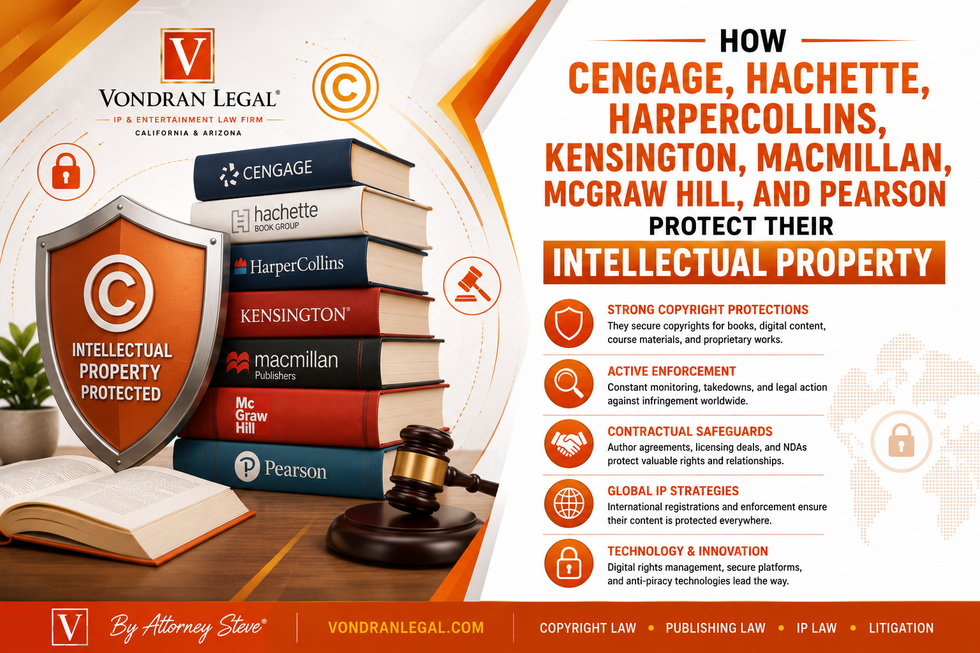
Major publishing companies such as Cengage, Pearson, McGraw Hill, Hachette Book Group, HarperCollins, Macmillan, and Kensington Publishing devote substantial resources to protecting their intellectual property. Their enforcement efforts are aimed at preserving the value of copyrighted works and licensed educational content in an increasingly digital marketplace.
If you have received a copyright infringement notice, a DMCA takedown, a settlement demand, or have been sued over books, educational materials, instructor resources, eBooks, or other published works, obtaining experienced legal advice promptly can help you evaluate your rights and develop a strategy tailored to your circumstances.
Need Help?
Vondran Legal® represents clients nationwide in copyright, publishing, licensing, and intellectual property disputes. If you have received a demand letter or are facing allegations involving copyrighted books, educational content, or digital publishing, contact our office to schedule a confidential consultation to discuss your options.

