
Vondran Legal® Music Law: Music Licensing. A Comprehensive Legal Guide for Producers, Studios, and Game Developers
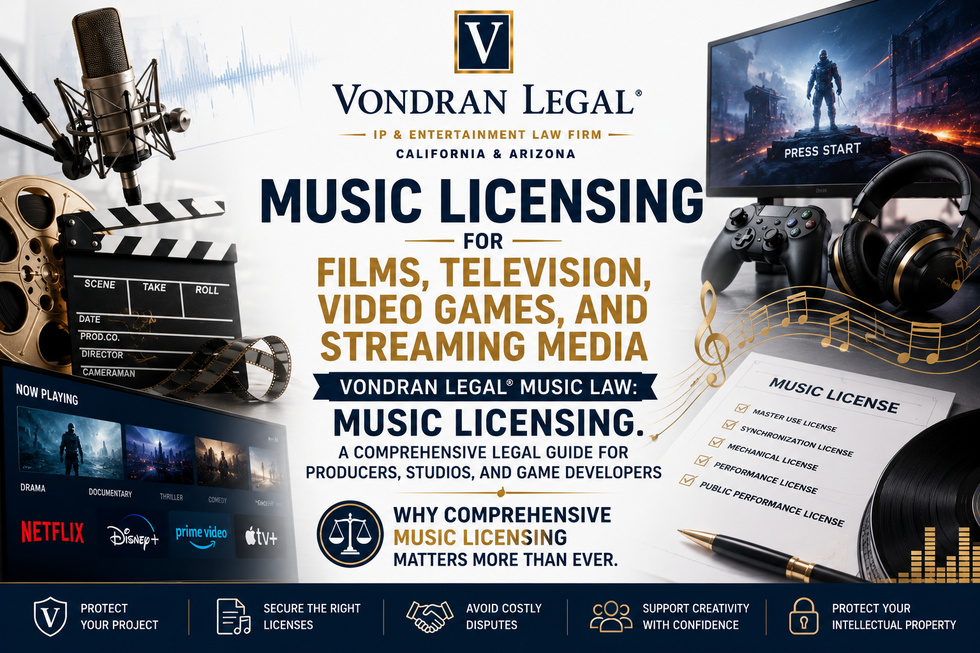
Why Comprehensive Music Licensing Matters More Than Ever
Few creative decisions have a greater emotional impact on a film, television series, documentary, commercial, trailer, or video game than the music. Think of the unforgettable closing scene in Fight Club accompanied by The Pixies' "Where Is My Mind," the emotional power of Tom Petty's music in countless productions, or the iconic radio stations in the Grand Theft Auto series featuring artists like Michael Jackson, Ozzy Osbourne, Kate Bush, and 2Pac.
The right song can transform a scene from memorable to legendary.
Unfortunately, many producers focus heavily on creating their projects while treating music licensing as an afterthought. Years later, they discover that they never obtained the rights necessary for streaming platforms, international distribution, downloadable content (DLC), remastered editions, mobile versions, or future technologies.
The result?
Entire soundtracks get replaced.
Games lose iconic songs.
Television series appear on streaming services with completely different music.
Fans complain.
Studios spend millions relicensing—or simply remove the songs altogether.
At Vondran Legal®, we help producers, filmmakers, game developers, advertisers, and content creators understand music licensing before problems arise. Properly negotiating music rights at the beginning of a project can preserve the artistic integrity of your work for decades to come.
Why Music Licensing Is So Complicated
Many people assume there is simply one "music license."
There isn't.
Every commercially released song typically contains multiple copyrights owned by different parties.
For example, one song may involve:
-
the songwriter
-
multiple co-writers
-
a music publisher
-
a recording artist
-
a record label
-
featured performers
-
session musicians
-
producers
Each party may own different rights.
Before you can legally use the song, those rights must be cleared.
This is why obtaining permission for famous artists like Michael Jackson, Ozzy Osbourne, Tom Petty, Kate Bush, The Beatles, Queen, Taylor Swift, Metallica, or The Rolling Stones is often a sophisticated legal transaction involving numerous stakeholders.
The Copyrights Inside Every Song
Generally speaking, there are two primary copyrights involved.
1. The Musical Composition
This protects:
-
melody
-
harmony
-
chord progression
-
lyrics
-
musical arrangement
These rights are usually controlled by the songwriter or music publisher.
2. The Master Recording
This protects the actual recorded performance.
Usually owned by:
-
the record label
-
independent artist
-
recording company
If you want to use the famous recording everyone recognizes, you almost always need permission from the owner of the master recording.
The Most Important Music Licenses
Synchronization ("Sync") License
This is probably the most important license for filmmakers.
A synchronization license allows music to be synchronized with visual images.
Examples include:
-
movies
-
television shows
-
YouTube productions
-
documentaries
-
advertisements
-
trailers
-
streaming videos
-
online content
-
video games with cinematic sequences
Without a synchronization license, using copyrighted music with video may constitute copyright infringement.
Master Use License
Even after obtaining a synchronization license, you usually still need permission to use the original recording.
For example:
You want to use Michael Jackson's original recording of "Beat It."
You need permission from whoever owns that master recording.
If instead you hire another band to record the song yourself, you may only need the synchronization rights (plus other applicable licenses), not the original master recording.
Mechanical License
Mechanical licenses apply when reproducing and distributing musical compositions.
Historically these covered:
-
CDs
-
vinyl records
-
downloads
Today they may also arise in digital distribution.
Public Performance License
Whenever music is publicly performed, additional rights may be implicated.
Examples include:
-
television broadcasts
-
streaming
-
restaurants
-
sporting events
-
theaters
Organizations such as:
-
ASCAP
-
BMI
-
SESAC
-
GMR
administer many public performance rights.
Print Rights
These cover printed sheet music and lyrics.
Less common in film production but still important for publishers.
Grand Rights
These generally apply to dramatic performances such as:
-
Broadway productions
-
musicals
-
operas
Music Licensing for Video Games
Video game licensing has become significantly more complicated than it was twenty years ago.
A modern game may appear on:
-
PlayStation
-
Xbox
-
Nintendo
-
Steam
-
Epic Games
-
mobile devices
-
cloud gaming
-
VR
-
downloadable expansions
-
remastered editions
Each distribution method should be carefully considered.
One of the best-known examples is the Grand Theft Auto franchise.
Earlier releases included dozens of iconic songs.
Later digital editions removed many of those songs after licenses reportedly expired.
Players purchasing today's digital versions receive a materially different soundtrack than those who purchased the original physical copies.
Proper legal drafting can often avoid these situations.
Music Licensing for Movies and Television
Many television shows produced before streaming services existed licensed music only for:
-
broadcast television
-
limited territories
-
limited time periods
Years later, when Netflix, Hulu, Disney+, Amazon Prime, Apple TV+, or HBO Max sought streaming rights, producers discovered they lacked permission to continue using the original music.
This reportedly occurred with shows including:
-
Scrubs
-
Dawson's Creek
Fans immediately noticed.
The emotional impact of certain scenes changed dramatically.
Some producers later spent substantial sums attempting to restore the original soundtrack.
Important Contract Terms Every Producer Should Consider
Every music license should be carefully negotiated.
Important provisions often include:
Duration
How long does the license last?
One year?
Ten years?
Forever?
Territory
Can the music be used:
-
United States only?
-
Worldwide?
-
Europe?
-
Asia?
-
Streaming globally?
Media Covered
One of the most overlooked provisions.
Does the license include:
-
television
-
cable
-
theatrical release
-
DVD
-
Blu-ray
-
streaming
-
downloads
-
mobile
-
VR
-
AR
-
social media
-
YouTube
-
TikTok
-
future technologies
Technology evolves quickly.
Your license should too.
Sequels
Can the music remain in:
-
sequels
-
expansions
-
remasters
-
director's cuts
-
collector's editions
-
anniversary editions
DLC
Video games often receive downloadable content years later.
Does your license permit continued use?
Promotional Rights
Can the music appear in:
-
trailers
-
advertisements
-
television commercials
-
YouTube marketing
-
convention presentations
-
investor presentations
Merchandising
Can the music accompany merchandise promotions?
Assignment
Can the production company sell the film?
Can another studio acquire the project?
Will the music license transfer?
Sublicensing
May distributors sublicense the work?
International distributors?
Streaming platforms?
Exclusivity
Will your competitors be allowed to use the same song?
Or do you receive exclusive rights?
Renewal Rights
Can you extend the agreement?
How much will renewal cost?
Royalty Structure
Some agreements involve:
-
flat fees
-
royalties
-
revenue sharing
-
milestone payments
-
streaming bonuses
Credit Requirements
Must the artist receive:
-
screen credit
-
game credits
-
soundtrack credits
Approval Rights
Some artists require approval over:
-
scene context
-
edits
-
trailers
-
promotional use
-
political associations
Moral Rights
International productions may involve moral rights issues.
These should be carefully evaluated.
Indemnification
Who bears responsibility if rights were not properly obtained?
Strong indemnity provisions can be critical.
Representations and Warranties
Each party should confirm it owns the rights being licensed.
This can prevent expensive ownership disputes later.
How Vondran Legal® Can Help
Music licensing frequently involves multiple negotiations occurring simultaneously.
Our firm can assist with:
-
negotiating synchronization licenses
-
negotiating master use licenses
-
reviewing publisher agreements
-
communicating with record labels
-
negotiating worldwide rights
-
drafting custom licensing agreements
-
reviewing chain of title
-
evaluating streaming rights
-
negotiating renewal provisions
-
protecting future technologies
-
risk management and copyright compliance
-
due diligence for acquisitions involving music rights
-
copyright infringement counseling
-
licensing strategy for independent filmmakers and AAA game developers
Whether your project involves one independent musician or a legendary recording artist, experienced legal counsel can help identify the appropriate rights holders, coordinate negotiations, and ensure that the resulting agreements reflect your project's distribution strategy and long-term business goals.
Why Experienced Counsel Matters
Licensing famous music often involves negotiations with sophisticated rights holders, including major record labels, music publishers, business managers, estates, and entertainment attorneys. Every deal is different. Some artists readily license music for films but not video games. Others may permit worldwide streaming but prohibit political advertising, trailers, or merchandising.
An attorney can help you identify all required permissions, negotiate favorable terms, avoid costly omissions, and reduce the risk that your production will need to replace iconic music years after release.
Frequently Asked Questions
Can I use a famous song if I give the artist credit?
No. Credit alone does not replace the need for copyright permission.
Can I buy one license that covers everything forever?
Sometimes, but perpetual, worldwide, all-media licenses are often significantly more expensive and may not be available for highly valuable songs.
Can I use a cover version instead of the original recording?
Possibly. A cover may eliminate the need for a master use license, but you will still generally need permission for the underlying musical composition and any other applicable rights.
What if my film eventually goes to Netflix or another streaming platform?
Your original license should expressly authorize streaming and other digital distribution methods. If it does not, you may be forced to renegotiate or replace the music.
What happens if I use music without obtaining all required licenses?
Potential consequences include copyright infringement claims, injunctions, statutory damages, actual damages, profits, attorneys' fees in appropriate cases, removal of your project from distribution, delayed releases, or the costly replacement of music after your project has already been completed.
Final Thoughts
Music is one of the most valuable creative assets in any film, television show, documentary, commercial, or video game. A single iconic song can define a scene, shape audience memories, and dramatically increase a project's commercial impact. But those benefits come with equally significant legal responsibilities.
The best music licensing strategy begins long before production wraps. By carefully identifying the necessary rights, negotiating comprehensive agreements that anticipate future technologies and distribution channels, and documenting every aspect of the transaction, producers can protect both their creative vision and their investment.
If your company is licensing music for a film, television series, commercial, documentary, streaming project, or video game, experienced copyright counsel can help ensure that your agreements are comprehensive, enforceable, and built to stand the test of time.

