
ATTORNEY STEVE® – CALL US IF YOU NEED HELP WITH TRADEMARK REGISTRATION, BRAND PROTECTION, OR INTELLECTUAL PROPERTY DISPUTES – (877) 276-5084
INTRODUCTION
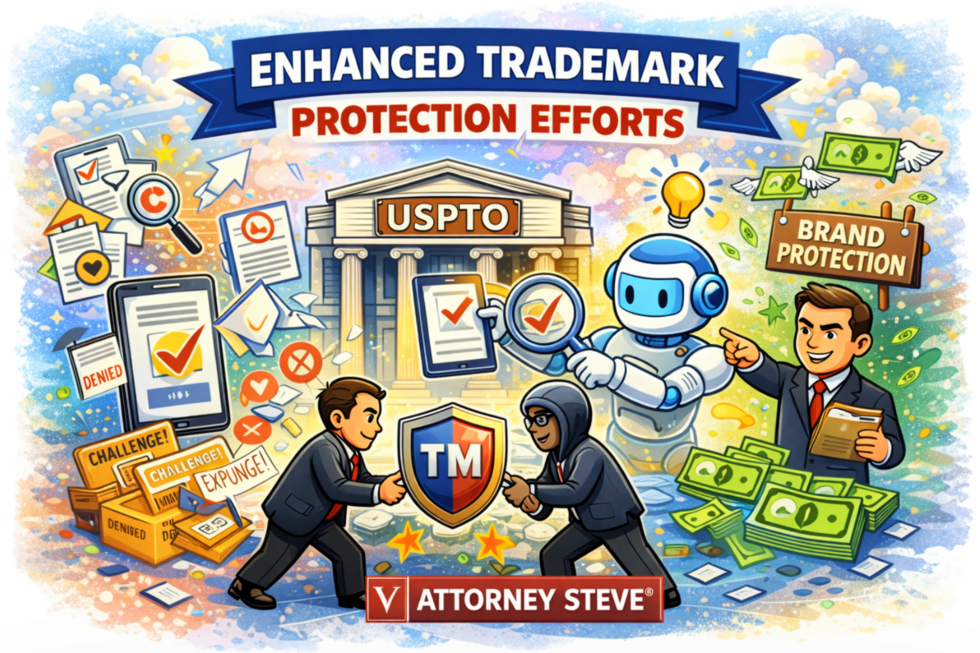
The U.S. Patent and Trademark Office (USPTO) is in the middle of a significant modernization effort designed to make trademark registration faster, more accurate, and more reliable. While these changes may seem administrative on the surface, they have real consequences for businesses, creators, and brand owners seeking to protect their marks.
At a high level, the USPTO is focused on two parallel goals: improving efficiency in the application process and restoring integrity to the trademark register. Together, these changes are reshaping how trademarks are obtained, maintained, and enforced in the United States.
A CLEANER, MORE RELIABLE TRADEMARK REGISTER
One of the most important developments is the USPTO's ongoing effort to remove unused and improperly maintained registrations. For years, the register has been crowded with marks that were never used in commerce or were no longer in use but remained active.
The USPTO has responded by increasing scrutiny of use-based filings and actively cancelling registrations that do not meet statutory requirements. This shift is significant. A cluttered register creates unnecessary conflicts and forces legitimate businesses to spend time and money navigating around marks that should not be there in the first place.
A cleaner register ultimately benefits brand owners by making it easier to secure rights and reducing artificial barriers to entry.
NEW CHALLENGE MECHANISMS UNDER THE TMA
The Trademark Modernization Act introduced streamlined procedures that allow third parties to challenge problematic registrations without engaging in full litigation before the Trademark Trial and Appeal Board.
These include:
- Expungement, which targets marks that were never used in commerce
- Reexamination, which focuses on whether the mark was in use at the time of filing
These proceedings are faster and more cost-effective than traditional cancellation actions. As a result, they are quickly becoming practical tools for clearing blocking marks and strengthening a brand's position without the expense of extended litigation.
DIGITAL UPGRADES AND FASTER PROCESSING
The USPTO has also made substantial improvements to its digital infrastructure. Updated filing systems and the rollout of the TTAB Center have streamlined how applications and disputes are managed.
For applicants and practitioners, this translates into a more predictable and efficient process. Filings are easier to track, communication with the Office is more transparent, and procedural bottlenecks are gradually being reduced.
In practical terms, this means that timing matters more than ever. A more efficient system allows competitors to move quickly, and delays in filing can result in lost priority.
THE GROWING ROLE OF AI IN TRADEMARK REVIEW
Another notable development is the USPTO's exploration of artificial intelligence to assist with trademark examination. These tools are being developed to identify potential conflicts earlier and improve consistency in how applications are reviewed.
While still evolving, AI-assisted examination is likely to reduce processing times and flag issues that might otherwise go unnoticed until later stages. For applicants, this reinforces the importance of conducting thorough clearance searches and submitting well-prepared applications from the outset.
WHAT THIS MEANS FOR BRAND OWNERS
Taken together, these changes create a more efficient system, but also one that demands greater diligence.
First, there is a clear opportunity. With invalid marks being removed and examination becoming more streamlined, businesses have a better chance of securing registrations without unnecessary obstacles.
At the same time, the USPTO is holding registrants to a higher standard. Trademark owners must be prepared to demonstrate legitimate, ongoing use in commerce and ensure that all maintenance filings are accurate and properly supported. Registrations that are not actively used are increasingly vulnerable to challenge.
Finally, enforcement strategy is evolving. The availability of expungement and reexamination proceedings gives brand owners new tools to proactively clear the register and address conflicts early, often without resorting to full-scale litigation.
PRACTICAL CONSIDERATIONS
In light of these developments, businesses should take a more proactive approach to trademark management. This includes:
- Conducting periodic audits of existing registrations
- Confirming that all marks are in active commercial use
- Filing applications promptly to secure priority
- Using TMA proceedings strategically to remove blocking marks
A thoughtful approach to portfolio management is no longer optional. It is essential.
HOW VONDRAN LEGAL® HELPS WITH TRADEMARK PROTECTION
Vondran Legal® assists clients across a wide range of trademark matters, from initial clearance and registration to enforcement and dispute resolution.
Our services include trademark searches, USPTO filings, office action responses, and TTAB proceedings, as well as expungement and reexamination actions under the Trademark Modernization Act. We also help clients enforce their rights through demand letters, negotiations, and litigation when necessary.
With extensive experience in intellectual property enforcement, our firm focuses on practical, results-driven strategies designed to protect and strengthen your brand.
CONTACT A CALIFORNIA TRADEMARK ATTORNEY
If you are navigating the trademark process or facing a brand dispute, early legal guidance can make a significant difference.
Vondran Legal® has been a leader in intellectual property law since 2004, helping clients protect and enforce their trademark rights in an increasingly complex and fast-moving landscape.

