
Vondran Legal® - Concert Copyright Lawyer & Festival Counsel
What Every Artist Manager, Promoter, Festival Organizer, Talent Buyer, and Venue Should Know About Intellectual Property
By Attorney Steve® – California & Arizona Entertainment and Copyright Lawyer
The Business Behind Live Entertainment
If you work in the live entertainment industry, you've probably heard of the International Entertainment Buyers Association (IEBA).
Founded in 1970, IEBA is one of the most influential trade organizations in the live entertainment industry. Its members include talent buyers, booking agencies, artist managers, concert promoters, casinos, fairs, festivals, theaters, arenas, corporate event planners, and countless service providers that help put live shows on stage. Today, the organization represents more than 2,000 members responsible for billions of dollars in annual entertainment buying. Its annual conference in Nashville has become known as one of the industry's premier networking events and is famous for "Agents Alley," where buyers and agents meet to negotiate future tours and performances.
What makes IEBA unique is that it isn't a legal conference.
It is where business gets done.
Artists get booked.
Tours get planned.
Festivals are assembled.
Relationships are formed.
And unfortunately...
Legal problems often begin.
As an entertainment lawyer who represents creators, businesses, copyright owners, photographers, production companies, and technology companies, I've seen many legal disputes that could have been avoided with a little planning.
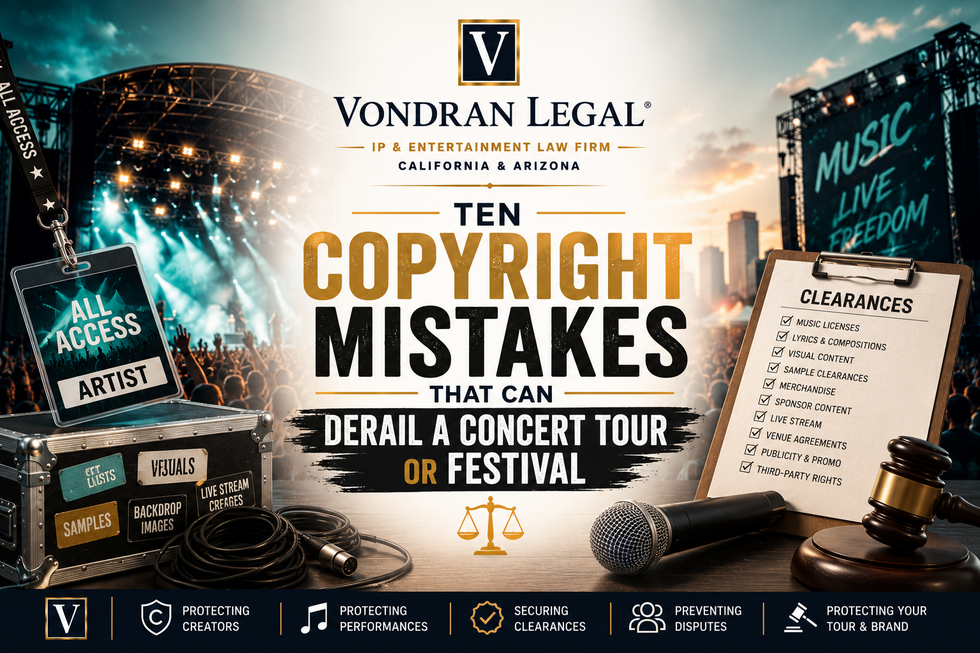
Here are ten of the biggest copyright mistakes I see.
1. Assuming Every Photograph Can Be Used for Promotion
One of the biggest mistakes promoters make is grabbing an artist photo from Google, Instagram, Facebook, or another website.
Just because an image is publicly visible does not mean you have permission to use it.
Professional photographers frequently license artist photos to magazines, record labels, publicity agencies, and promoters.
Those licenses often contain significant restrictions.
Using the image outside those terms may expose your company to a federal copyright infringement lawsuit.
I've handled numerous photography copyright disputes involving website images, social media advertising, and promotional materials.
The damages can easily exceed the cost of simply licensing the image correctly in the first place.
2. Believing Social Media Equals Permission
This mistake has become incredibly common.
Someone finds a great Instagram post showing last year's festival.
They repost it.
They place it on the event website.
They use it in Facebook advertising.
Unfortunately, copyright law generally doesn't work that way.
The photographer—not Instagram—owns the copyright.
Even if the artist reposted it, that doesn't automatically grant permission for commercial advertising.
3. Using Fan Videos in Marketing Campaigns
Fans love posting concert videos.
Marketing departments love using them.
That combination creates problems.
Those videos may contain copyrighted music, performances, stage visuals, choreography, or other protected content.
Commercial use often requires permission from multiple rights holders.
4. Forgetting About Copyright in Stage Design
Many people focus exclusively on music.
They forget that copyright may also protect:
- Stage artwork
- Video walls
- Animation
- Digital graphics
- Promotional videos
- Opening sequences
- Motion graphics
- Original scenic artwork
Large productions frequently involve dozens of copyright owners.
5. Ignoring Music Licensing Requirements
Playing music publicly isn't as simple as pressing play.
Depending on the event, organizers may need licenses from performing rights organizations such as ASCAP, BMI, SESAC, or GMR.
These organizations collect royalties on behalf of songwriters and publishers.
Failure to obtain appropriate licenses can lead to infringement claims.
6. Assuming AI-Generated Content Is Automatically Safe
Artificial intelligence is transforming entertainment.
Many promoters now use AI for:
- Poster designs
- Advertising copy
- Promotional videos
- Voiceovers
- Artist biographies
- Marketing campaigns
But AI raises difficult copyright questions.
Who owns the output?
Was copyrighted material used to train the model?
Does the output substantially resemble protected works?
These issues continue to evolve and deserve careful legal review.
7. Forgetting the Right of Publicity
Copyright is only half the equation.
Using an artist's name, image, likeness, signature, or voice may also implicate state right-of-publicity laws.
Even if a photograph is properly licensed, you may still need authorization depending on how it is used commercially.
8. Hiring Independent Contractors Without Written IP Agreements
Graphic designers.
Videographers.
Drone operators.
Website developers.
Freelance photographers.
Without a properly drafted written agreement, the person who created the work often remains the copyright owner.
That can create expensive disputes years later.
9. Using Stock Images Incorrectly
Stock licenses are not one-size-fits-all.
Many contain limitations regarding:
- Merchandise
- Advertising
- Print quantities
- Geographic distribution
- Editorial versus commercial use
- AI training
- Resale
Reading the license matters.
10. Waiting Until Someone Sends a Demand Letter
This is the mistake that costs the most money.
By the time an attorney sends a cease-and-desist letter or files a federal copyright lawsuit, many preventative options have disappeared.
A proactive legal review before a major tour or festival can identify issues while they are still inexpensive to fix.
Why Conferences Like IEBA Matter
One reason sophisticated firms such as Loeb & Loeb participate in organizations like IEBA is simple.
They understand that the entertainment industry values relationships.
Rather than waiting for litigation, they educate clients, speak on emerging legal issues, and build trust with industry professionals. Loeb lawyers have spoken at IEBA conferences on topics affecting fairs and festivals, while the firm also hosts its own entertainment and IP conferences for industry counsel and executives.
That educational approach helps position them as trusted advisors long before disputes arise.
How an Entertainment Copyright Lawyer Can Help
Whether you are:
- A concert promoter
- A festival organizer
- A casino entertainment buyer
- An artist manager
- A booking agency
- A venue owner
- A production company
- A photographer
- A record label
- A touring artist
An experienced entertainment attorney can help with:
- Copyright clearance
- Artist agreements
- Tour contracts
- Photography licenses
- Music licensing issues
- Right of publicity
- Trademark protection
- DMCA takedowns and counter-notices
- AI and copyright compliance
- IP audits for festivals and venues
- Copyright infringement litigation
- Fair use opinions and risk assessments
Addressing these issues early can reduce risk and avoid costly disputes later.
About Attorney Steve®
At Vondran Legal®, I represent creators, entertainment companies, software developers, photographers, musicians, filmmakers, influencers, technology companies, and businesses nationwide in copyright and intellectual property matters. My practice includes copyright litigation, DMCA disputes, entertainment contracts, licensing, right-of-publicity claims, trademark matters, and intellectual property risk management.
If your company is preparing for a concert tour, festival, or live entertainment event, now is an ideal time to review your intellectual property practices before problems arise.

