
ATTORNEY STEVE® – CALL US IF YOU NEED HELP WITH CREATOR RIGHTS, AI-GENERATED CONTENT ISSUES, COPYRIGHT REGISTRATION, DIGITAL IDENTITY PROTECTION, SOFTWARE PROTECTION, OR INTELLECTUAL PROPERTY ENFORCEMENT – (877) 276-5084
INTRODUCTION
The entertainment industry is undergoing one of the most significant transformations in modern history. Artificial intelligence, creator-driven media, streaming platforms, social commerce, and decentralized digital branding are fundamentally reshaping how intellectual property is created, monetized, licensed, distributed, and enforced.
A recent article published by Music Business Worldwide argued that the future of the music industry will belong to executives capable of bridging the “creative, commercial, and technological divides.” While the article focused primarily on music-industry leadership, its broader implications extend far beyond record labels and artist management companies. The article also provides a compelling framework for understanding the evolving role of lawyers in the entertainment and intellectual property sectors.
Indeed, the modern entertainment lawyer can no longer operate solely as a traditional contract reviewer or reactive litigator. The next generation of successful attorneys will likely be those who understand not only legal doctrine, but also creator monetization models, platform economics, artificial intelligence systems, digital branding, online audience development, and emerging technologies impacting ownership and identity rights.
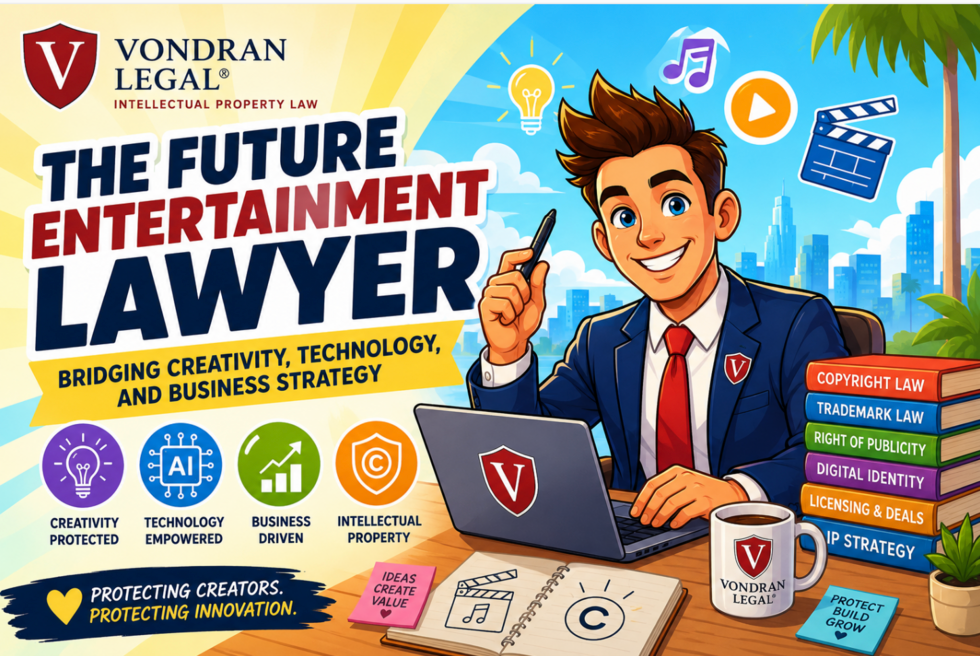
In many respects, the entertainment lawyer of the future will function less like a traditional legal technician and more like a strategic business architect operating at the intersection of creativity, commerce, and technology.
THE DECLINE OF THE TRADITIONAL LEGAL SILO
For decades, entertainment law largely revolved around a relatively stable ecosystem. Lawyers negotiated recording agreements, protected copyrights, handled trademark filings, litigated infringement claims, and advised clients on licensing and royalty disputes.
While those services remain important, the economic structure of the entertainment industry has dramatically evolved.
Today's creators are often independent businesses unto themselves. A single content creator may simultaneously operate:
- a YouTube channel,
- a merchandise company,
- a podcast,
- a subscription community,
- a licensing business,
- multiple social media platforms,
- and a growing portfolio of intellectual property assets.
Similarly, musicians are no longer dependent solely upon record labels for distribution and audience reach. Independent artists now monetize directly through streaming platforms, fan subscriptions, social commerce, sponsorship arrangements, sync licensing, branded partnerships, and digital product ecosystems.
This shift creates increasingly complex legal issues involving:
- multi-platform licensing,
- AI-generated content,
- right of publicity concerns,
- influencer agreements,
- digital identity protection,
- revenue participation structures,
- platform terms-of-service disputes,
- and ownership rights in synthetic media.
Lawyers who remain narrowly focused on isolated legal silos may find themselves increasingly disconnected from the practical realities facing modern clients.
ARTIFICIAL INTELLIGENCE IS RESHAPING LEGAL RISKS
Perhaps no issue illustrates this transition more clearly than artificial intelligence.
AI technologies are rapidly disrupting nearly every segment of the entertainment and creator economy. Voice-cloning systems can replicate artists' voices with remarkable accuracy. Generative AI systems can create music, artwork, scripts, and videos in seconds. Deepfake technology can simulate public figures and creators in ways that blur the lines between authenticity and fabrication.
These developments raise novel legal questions involving:
- copyright ownership,
- derivative works,
- training-data liability,
- unfair competition,
- trademark confusion,
- right of publicity claims,
- false endorsement,
- and consumer deception.
Importantly, many of these legal questions remain unsettled.
As a result, entertainment lawyers increasingly serve not merely as litigators, but as risk-management advisors helping clients proactively navigate uncertain technological landscapes.
The attorney of the future must understand not only what the law currently says, but also how evolving technologies may impact:
- monetization structures,
- platform policies,
- evidentiary standards,
- licensing negotiations,
- and long-term brand valuation.
This requires a broader, interdisciplinary mindset that blends legal analysis with technological literacy and business strategy.
INTELLECTUAL PROPERTY IS BECOMING AN ECOSYSTEM
Another major theme emerging from the article is the growing importance of treating intellectual property not as isolated assets, but as interconnected business ecosystems.
Historically, many entertainment lawyers focused primarily on protecting individual works such as a song, a trademark, a copyright registration, or a licensing agreement.
Today, however, creators increasingly build expansive ecosystems around their intellectual property.
For example, a successful creator brand may involve:
- music rights,
- video content,
- podcast content,
- merchandise,
- apparel trademarks,
- licensing partnerships,
- subscription communities,
- live events,
- sponsorship arrangements,
- AI avatars,
- and digital collectibles.
The legal issues surrounding these ecosystems require attorneys to think strategically about scalability, monetization, and long-term intellectual property management.
Modern legal counsel increasingly involves:
- brand architecture,
- rights portfolio management,
- digital enforcement strategies,
- monetization planning,
- platform-risk analysis,
- and asset valuation.
In this environment, lawyers who understand business growth mechanics may become significantly more valuable than those focused solely on legal procedure.
THE RISE OF THE LAWYER-STRATEGIST
The entertainment lawyer of the future will likely resemble a hybrid advisor capable of combining legal expertise with practical business insight.
Clients increasingly seek attorneys who understand:
- creator culture,
- audience engagement,
- platform monetization,
- social media dynamics,
- influencer marketing,
- licensing strategy,
- and digital branding.
In many respects, legal services themselves are evolving from transactional support toward strategic advisory relationships.
For example, creators may now seek counsel regarding:
- how to structure brand partnerships,
- whether to license AI rights,
- how to protect digital identity,
- how to monetize user-generated content,
- how to structure creator collaborations,
- or how to protect audience goodwill from platform disruption.
These issues extend far beyond traditional legal drafting.
Accordingly, the modern attorney must increasingly understand how creators actually generate revenue and build long-term enterprise value.
SUBSCRIPTION BASED LEGAL SERVICES AND THE CREATOR ECONOMY
Another likely evolution involves the structure of legal billing itself.
Many creators and digital entrepreneurs prefer ongoing strategic guidance rather than isolated hourly legal engagements. As a result, subscription-style legal advisory services may become increasingly common within entertainment and intellectual property practices.
For example, law firms may offer recurring counsel packages involving:
- monthly contract review,
- intellectual property monitoring,
- AI-risk assessments,
- trademark strategy,
- licensing consultation,
- monetization guidance,
- and platform enforcement support.
This model aligns more closely with the continuous operational needs of creator-driven businesses.
Importantly, it also allows attorneys to participate more proactively in client growth rather than becoming involved only after disputes arise.
THE EXPANDING IMPORTANCE OF DIGITAL IDENTITY RIGHTS
One of the most significant emerging practice areas may involve digital identity protection.
As AI-generated personas, synthetic influencers, and digital replicas become increasingly common, disputes involving identity rights are likely to accelerate.
Future litigation may involve:
- unauthorized voice replication,
- digital likeness exploitation,
- AI-generated endorsements,
- holographic performances,
- synthetic media impersonation,
- and false affiliation claims.
These disputes will likely implicate overlapping areas of law involving:
- copyright,
- trademark,
- unfair competition,
- privacy rights,
- publicity rights,
- consumer protection statutes,
- and contractual limitations.
Attorneys who establish early expertise in digital identity law may find themselves well-positioned as this area continues to evolve.
CONCLUSION
The entertainment industry's transformation is not merely technological. It is structural.
The creators of tomorrow are increasingly becoming vertically integrated media brands operating across multiple revenue channels and digital ecosystems. Artificial intelligence is accelerating both opportunity and legal uncertainty. Intellectual property rights are becoming more interconnected, more valuable, and more vulnerable to disruption.
In this environment, the role of the entertainment lawyer is also changing. The future attorney will likely need to bridge legal doctrine with technological literacy, business strategy, digital branding, monetization systems, and platform economics. Lawyers who understand only the law may struggle to remain competitive in creator-driven industries increasingly shaped by innovation and rapid disruption.
Conversely, attorneys capable of integrating creativity, commerce, and technology into their legal practice may become indispensable advisors to the next generation of creators, artists, entrepreneurs, and digital brands.
The future entertainment lawyer may not simply protect intellectual property. The future entertainment lawyer may help architect the entire ecosystem surrounding it.
HOW VONDRAN LEGAL® CAN ASSIST
Vondran Legal® represents creators, entertainers, entrepreneurs, software developers, and digital brands nationwide in entertainment law and intellectual property matters. We assist with copyright registrations, AI-generated content issues, creator rights, software protection, licensing agreements, and intellectual property enforcement.
You can contact us at (877) 276-5084 or reach out by email for a free initial consultation to discuss your matter.
