
ATTORNEY STEVE® – CALL US IF YOU NEED HELP WITH TRADE DRESS, TRADEMARKS, OR BRAND PROTECTION – (877) 276-5084
INTRODUCTION
Trade dress is one of the most underutilized tools in intellectual property law, yet in the right case, it can be one of the most powerful.
Most businesses understand the importance of protecting their name and logo. That is typically where the conversation starts. But in today's market, competitors are often not copying names. They are copying something more subtle, and often more valuable. The overall look and feel of a brand.
That is exactly what trade dress is designed to protect.
If your product, packaging, or visual identity has a distinctive aesthetic that consumers recognize, you may already have enforceable rights. The issue is that many businesses do not realize it until a competitor starts getting too close.
WHAT IS TRADE DRESS (IN PRACTICAL TERMS)?
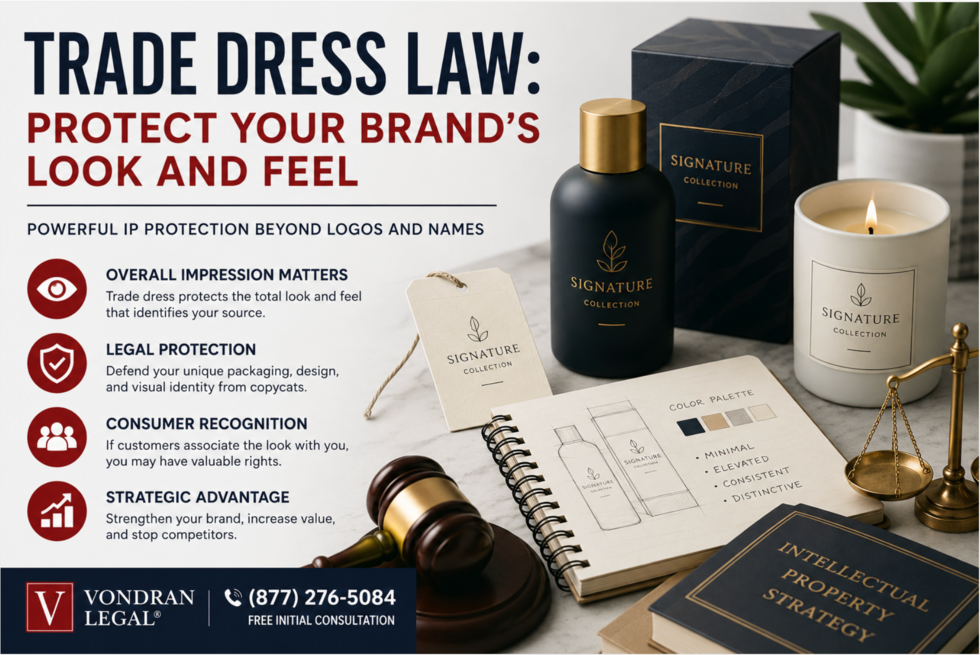
Trade dress refers to the total visual appearance of a product or business when that appearance functions as a source identifier. It is not limited to logos or words. Instead, courts look at how all elements come together to create a recognizable commercial impression.
This can include product design, packaging, color schemes, layout, or even the environment in which goods or services are presented. In some cases, it can extend to a consistent visual format used across media or branded content.
The key question is straightforward. When consumers see this look, do they associate it with a particular source?
If the answer is yes, then trade dress protection may exist.
WHY TRADE DRESS IS BECOMING MORE IMPORTANT
There has been a noticeable shift in how infringement occurs, especially in industries driven by branding and visual identity.
Instead of directly copying trademarks, competitors are increasingly mimicking:
- Packaging styles and color palettes
- Product presentation and design language
- Overall brand aesthetic or “vibe”
This is particularly common in beauty, wellness, fashion, and consumer goods, but it is also showing up in digital media and entertainment. In those spaces, brand identity is often conveyed visually before a consumer ever sees a name.
Because of that, courts are focusing more heavily on whether the overall visual impression of two products is likely to cause confusion. That is the core of trade dress law.
REGISTRATION IS OPTIONAL, BUT STRATEGY IS NOT
One of the more interesting aspects of trade dress is that it does not always require federal registration to be enforceable. Rights can arise through use under the Lanham Act, which gives businesses flexibility when acting against copycat competitors.
That said, relying solely on unregistered rights can create challenges. Registration can strengthen your position by putting the market on notice and providing additional leverage in disputes.
In practice, the most effective approach is not to treat trade dress as an afterthought. It should be considered alongside trademark strategy from the outset, particularly for brands that rely heavily on visual differentiation.
THE LEGAL FRAMEWORK (WHAT YOU ACTUALLY HAVE TO SHOW)
Trade dress claims are fact-intensive, and courts tend to scrutinize them carefully. While the doctrine is flexible, three core elements consistently drive the analysis.
First, the design must be non-functional. In other words, the feature you are trying to protect cannot be essential to how the product works. If it serves a utilitarian purpose, it generally falls outside the scope of trade dress.
Second, the design must be distinctive. This is often the most challenging element, particularly for product design. In many cases, a business must show that consumers have come to recognize the visual appearance as identifying a single source. This is what courts refer to as secondary meaning, and it typically requires real-world evidence such as long-term use, marketing efforts, and consumer recognition.
Third, there must be a likelihood of confusion. The analysis focuses on whether consumers would believe that the competing product comes from the same source based on its overall appearance. Courts do not isolate individual elements. They evaluate the total impression created by the design.
HOW THIS PLAYS OUT IN THE REAL WORLD
Trade dress is often broader than clients initially expect. It is not limited to traditional retail products.
We routinely see issues arise in areas such as product packaging, retail environments, and branded marketing materials. In entertainment and digital media, the concept can extend even further, including recurring visual styles, production design, or consistent content formats that become associated with a particular creator or brand.
This is where trade dress starts to overlap with other areas of intellectual property. While copyright may protect specific creative works, and trademarks protect names and logos, trade dress fills the gap by protecting the overall visual identitythat ties everything together.
COMMON RISKS AND MISSTEPS
A recurring issue we see is that businesses underestimate how protectable their visual identity actually is. At the same time, others inadvertently expose themselves to liability by borrowing too heavily from a competitor's aesthetic.
Some common problem areas include:
- Assuming only logos or names are protectable
- Adopting packaging or design elements that closely resemble a competitor
- Failing to maintain consistency in branding, which weakens distinctiveness
- Not documenting how a brand is presented and recognized in the market
Because trade dress relies heavily on perception and context, these types of missteps can become significant issues if a dispute arises.
A PRACTICAL APPROACH TO TRADE DRESS PROTECTION
From a strategic standpoint, trade dress should be approached proactively rather than reactively.
Businesses should focus on developing a cohesive and distinctive visual identity, then using that identity consistently across products, marketing, and platforms. Over time, this consistency is what builds the consumer association necessary to support a claim.
It is also important to monitor the market. If competitors begin adopting a similar look and feel, early action can make a meaningful difference in how a dispute is resolved.
Trade dress is not just a defensive tool. When used correctly, it can serve as a meaningful asset that reinforces brand value and market position.
HOW VONDRAN LEGAL® CAN ASSIST
Our firm assists businesses, creators, and brands nationwide with trademark, trade dress, and brand protection matters. We assist with:
- Trade dress analysis and enforcement
- Trademark clearance and USPTO filings
- Responding to infringement and cease-and-desist disputes
- Protecting packaging, product design, and brand aesthetics
- Advising on brand strategy and IP portfolio development
We understand how visual identity and consumer perception can become valuable intellectual property assets, and we work to position our clients for the strongest possible protection and enforcement strategy. You can contact us at (877) 276-5084 or reach out by email for a free initial consultation to evaluate your options.
