
UCLA Entertainment Law Symposium 2026: What Every Creator, Producer, Musician and Entertainment Company Should Know
By Attorney Steve® | Vondran Legal®
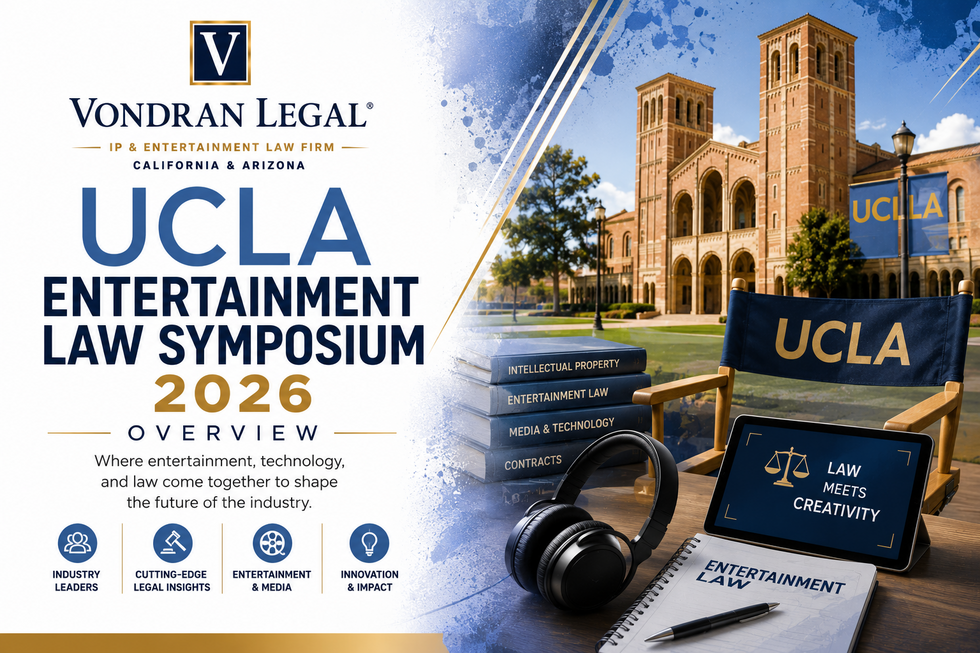
For fifty years, the UCLA Entertainment Law Symposium has been one of the entertainment industry's premier gatherings of lawyers, studio executives, producers, agents, business managers, academics, and creative professionals. The 50th Annual UCLA Entertainment Law Symposium, held on June 18, 2026, celebrated not only the symposium's remarkable history but also highlighted the legal issues that are rapidly reshaping Hollywood and the global entertainment business.
This year's discussions reflected a simple reality: entertainment law is evolving faster than ever. Artificial intelligence, digital distribution, creator-driven media, changing licensing models, and new methods of content monetization are forcing creators and businesses alike to rethink how they protect intellectual property and structure business relationships.
While the symposium featured distinguished entertainment lawyers and industry leaders discussing emerging trends, the legal issues raised are not limited to major studios. Independent filmmakers, musicians, photographers, software developers, YouTubers, influencers, authors, production companies, sports organizations, and technology startups are facing many of these same challenges every day.
As an entertainment and intellectual property attorney, I found many of the symposium's themes consistent with the questions my clients ask on a daily basis.
Artificial Intelligence Is Changing Entertainment Law
Perhaps no issue received more attention throughout the entertainment industry this year than artificial intelligence.
AI now touches nearly every aspect of content creation, including:
- screenplay development
- music production
- voice cloning
- image generation
- video editing
- advertising
- marketing
- localization
- animation
- software development
While these technologies offer tremendous opportunities, they also create significant legal uncertainty.
Questions clients increasingly ask include:
- Who owns AI-generated content?
- Can AI output receive copyright protection?
- Does training AI on copyrighted works constitute infringement?
- Can a person's voice or likeness be copied using AI?
- Should contracts prohibit the use of AI during production?
- What disclosures should creators make regarding AI-assisted works?
Although many of these issues remain unsettled, one point is becoming increasingly clear: businesses that proactively address AI through carefully drafted contracts and internal policies will likely be better positioned than those waiting for litigation to define the rules.
Copyright Remains the Foundation of the Entertainment Industry
Despite all of the excitement surrounding AI, copyright law remains the backbone of the entertainment business.
Whether producing:
- feature films
- television programming
- podcasts
- photography
- books
- software
- documentaries
- social media content
the ability to establish ownership and enforce exclusive rights remains essential.
Creators often underestimate the importance of obtaining written copyright assignments, work-for-hire agreements, licensing agreements, talent releases, and chain-of-title documentation before a project reaches the marketplace.
Unfortunately, many disputes arise only after a project becomes successful.
By then, the legal issues are considerably more expensive to resolve.
Entertainment Contracts Continue To Grow More Complex
Another recurring theme throughout the entertainment industry involves increasingly sophisticated contracts.
Modern entertainment agreements frequently address:
- AI usage
- ownership of prompts
- derivative works
- streaming royalties
- merchandising
- social media rights
- influencer obligations
- music synchronization
- NFT and digital asset rights
- publicity rights
- international distribution
- dispute resolution
- arbitration provisions
One poorly drafted paragraph can create years of litigation.
Business owners should resist the temptation to rely exclusively on online templates for significant entertainment transactions.
The Creator Economy Continues To Expand
One of the biggest developments over the past several years has been the explosive growth of the creator economy.
Today's creators may build multimillion-dollar businesses through:
- YouTube
- TikTok
- podcasts
- online education
- Patreon
- subscription communities
- digital products
Many creators unknowingly become media companies.
Yet they often continue operating without:
- written operating agreements
- intellectual property assignments
- licensing policies
- sponsorship agreements
- employment agreements
- confidentiality agreements
The legal risks grow alongside their audiences.
Protecting Your Brand Is More Important Than Ever
Entertainment businesses increasingly rely upon brand recognition.
That means intellectual property protection extends beyond copyright.
Businesses should also evaluate:
- trademark registrations
- domain name protection
- social media username protection
- licensing programs
- merchandising rights
- rights of publicity
- celebrity endorsements
- anti-counterfeiting strategies
Brand value often becomes one of a company's most valuable assets.
Independent Creators Face Many Of The Same Legal Risks As Major Studios
One of the biggest misconceptions in entertainment law is that legal services are only necessary for large production companies.
In reality, independent creators frequently encounter legal issues involving:
- copyright infringement
- DMCA takedown notices
- licensing disputes
- music clearance
- stock photography
- software licensing
- image usage
- talent releases
- influencer contracts
- sponsorship agreements
- royalty disputes
Many of these issues can often be addressed before they become expensive litigation.
Entertainment Litigation Continues To Evolve
Courts across the country continue addressing emerging issues involving:
- fair use
- AI-generated works
- online piracy
- software infringement
- streaming disputes
- digital licensing
- right of publicity
- trademark infringement
- false endorsement
- platform liability
Businesses should monitor these developments because legal precedent often influences future negotiations long before a case reaches trial.
Practical Takeaways From UCLA's 50th Entertainment Law Symposium
Although each panel focused on different aspects of the industry, several practical lessons emerged:
Plan ahead. Intellectual property protection should begin before publication or release.
Use written agreements. Oral understandings frequently lead to costly disputes.
Address AI directly. Contracts should specify whether AI may be used during development, production, editing, or marketing.
Protect ownership. Maintain clear documentation establishing who owns every component of a project.
Register important copyrights and trademarks. Federal registration provides significant enforcement advantages.
Review licensing arrangements carefully. Understand exactly what rights are being granted—and what rights are being retained.
Seek legal advice early. Preventive legal work often costs far less than litigation.
How Vondran Legal Can Help
At Vondran Legal®, we represent clients throughout California and nationwide in a broad range of entertainment and intellectual property matters, including:
- Entertainment contracts
- Copyright registration
- Copyright infringement litigation
- DMCA takedown and counter-notice matters
- Fair use opinions
- Trademark registration and enforcement
- Right of publicity disputes
- Software licensing disputes
- Photography licensing
- Film and television agreements
- Music licensing
- Royalty disputes
- Licensing agreements
- Influencer agreements
- Content creator legal services
- YouTube and online platform disputes
Whether you are an independent creator, production company, software developer, photographer, musician, publisher, influencer, startup, or established entertainment business, obtaining experienced legal guidance early in the process can help avoid costly disputes later.
Final Thoughts
The entertainment industry has always evolved alongside technology. Today's challenges—from artificial intelligence to digital licensing and online distribution—represent another significant chapter in that evolution.
The conversations taking place at the 50th Annual UCLA Entertainment Law Symposium demonstrate that successful creators and entertainment businesses are increasingly recognizing the importance of proactive legal planning. As technology reshapes how creative works are developed, distributed, and monetized, the value of experienced legal counsel continues to grow.
If your business creates, licenses, distributes, or monetizes creative content, now is an excellent time to review your contracts, intellectual property portfolio, and risk management practices to ensure they remain aligned with today's rapidly changing legal landscape.
About the Author
Steve Vondran (Attorney Steve®) is the founder of Vondran Legal®, an intellectual property and entertainment law firm representing creators, filmmakers, musicians, photographers, software companies, technology businesses, publishers, influencers, and entrepreneurs. His practice focuses on copyright, trademark, entertainment contracts, software licensing, DMCA matters, unfair competition, and related litigation in state and federal courts.
Need help with an entertainment law matter? Contact Vondran Legal® to schedule a confidential consultation and discuss how experienced legal counsel can help protect your creative works and business interests.

