
Vondran Legal® - FOIA Records Request to Federal Government - What you need to know! Flat rate fees to recover government documents! Call us at (877) 276-5084

Introduction
What is FOIA? In a democratic society, transparency and accountability are cornerstones that uphold the very tenets of freedom. The Freedom of Information Act (FOIA), enacted in 1966, provides any person the statutory right to request access to records from any federal executive agency. Over the decades, FOIA has become a powerful tool for journalists, researchers, activists, and ordinary citizens seeking to understand the workings of their government.
The importance of FOIA requests in ensuring a transparent government cannot be overstated. Transparency contributes to informed citizenry, which is essential for meaningful participation in democratic processes. When citizens have access to government records, they are better equipped to hold public officials accountable for their actions. For instance, investigative journalism critically depends on FOIA requests. Many significant scandals and inefficiencies within government agencies have come to light due to the information obtained through FOIA. From exposing wasteful expenditures to uncovering dubious policy decisions, FOIA empowers the press to keep the government in check.
FOIA fosters institutional accountability by making government actions visible to public scrutiny. It helps prevent abuses of power by ensuring that activities carried out by federal agencies are subject to examination.
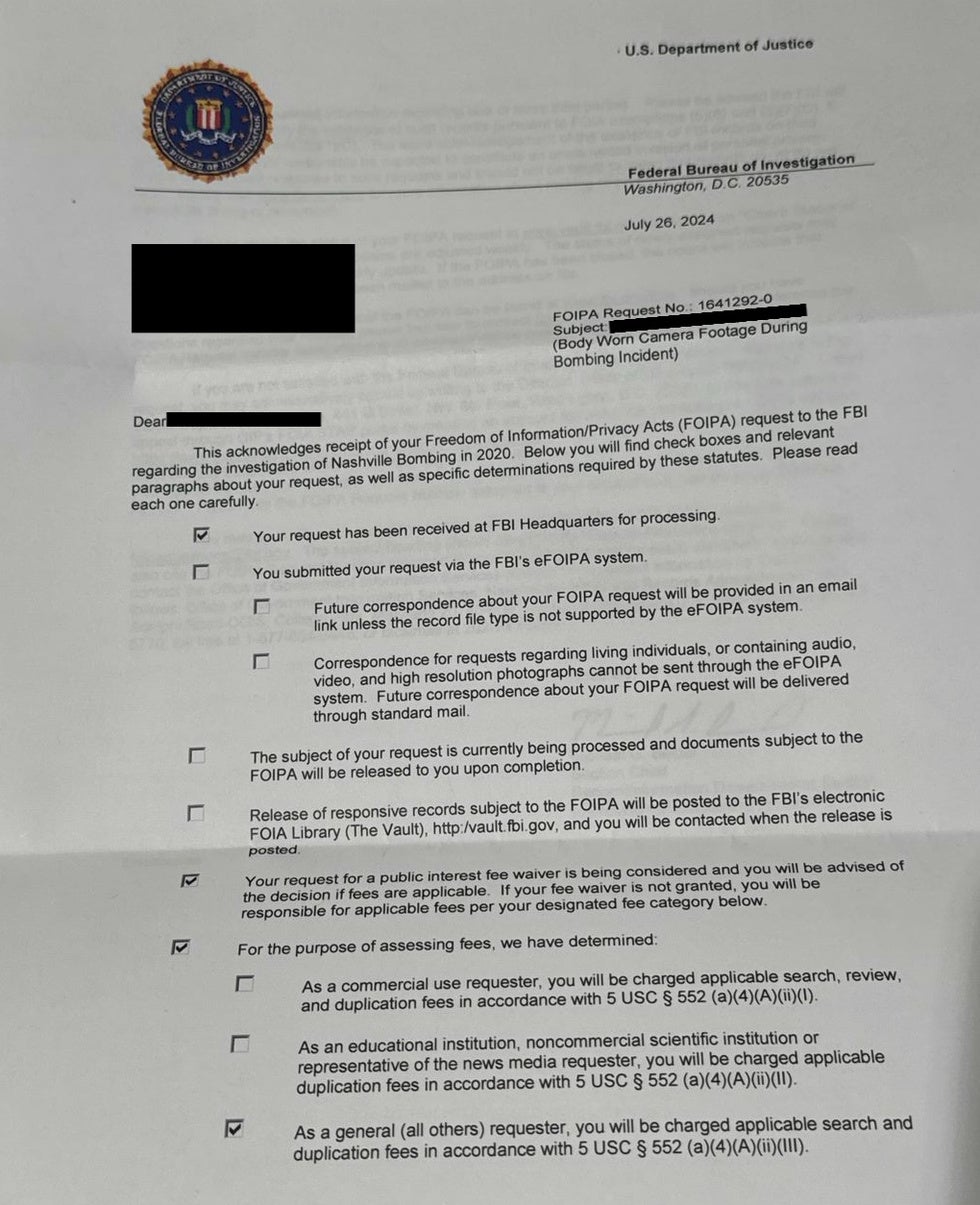
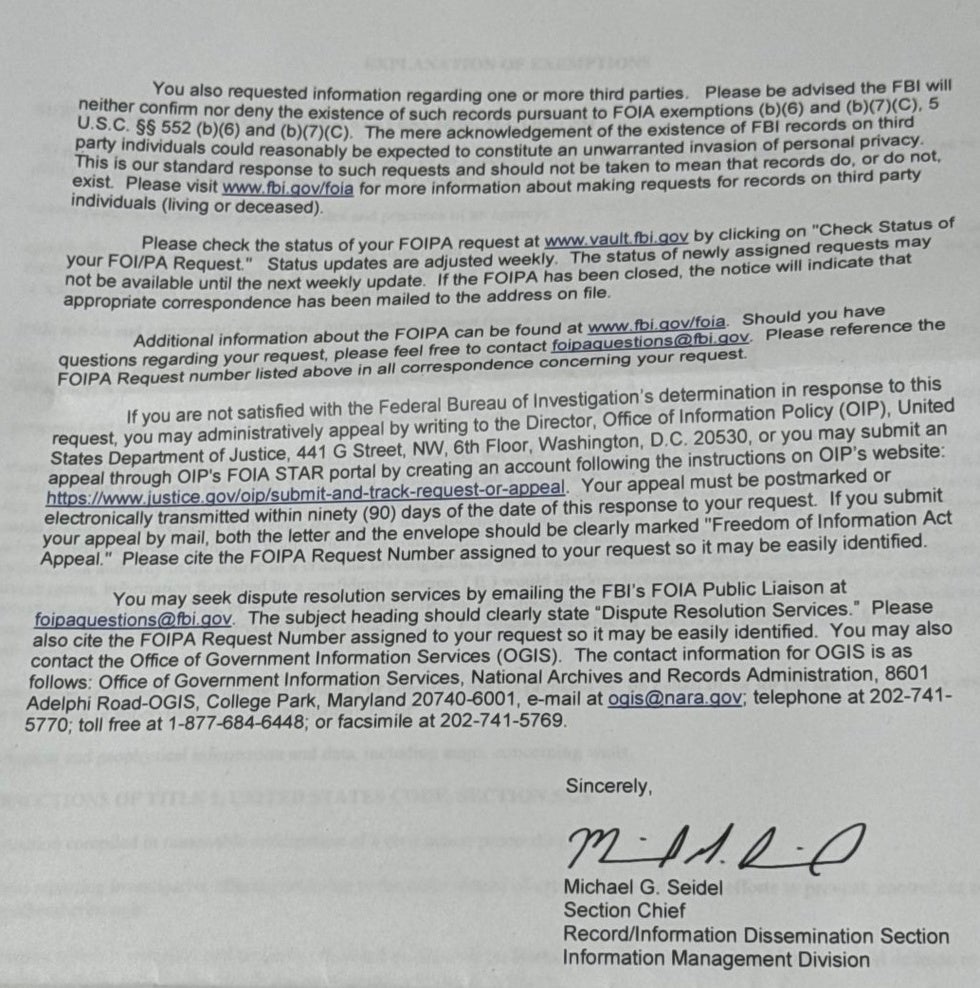
What is FOIA?
Click to watch Attorney Steve® Vondran explain in this Litigation Whiteboard® Crashcourse!
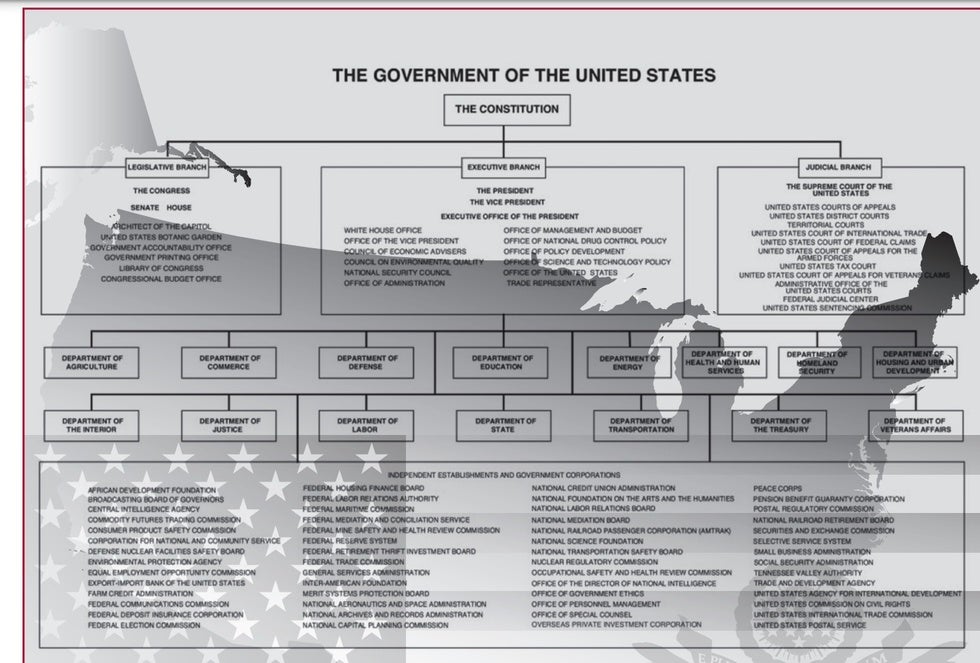
What federal agencies must comply?
The Freedom of Information Act (FOIA) of the United States applies to federal executive branch agencies, which means that these agencies are required to disclose information upon request, subject to certain exemptions.
Some of the main federal executive agencies that must comply with FOIA include, but are not limited to:
Reasons for denial
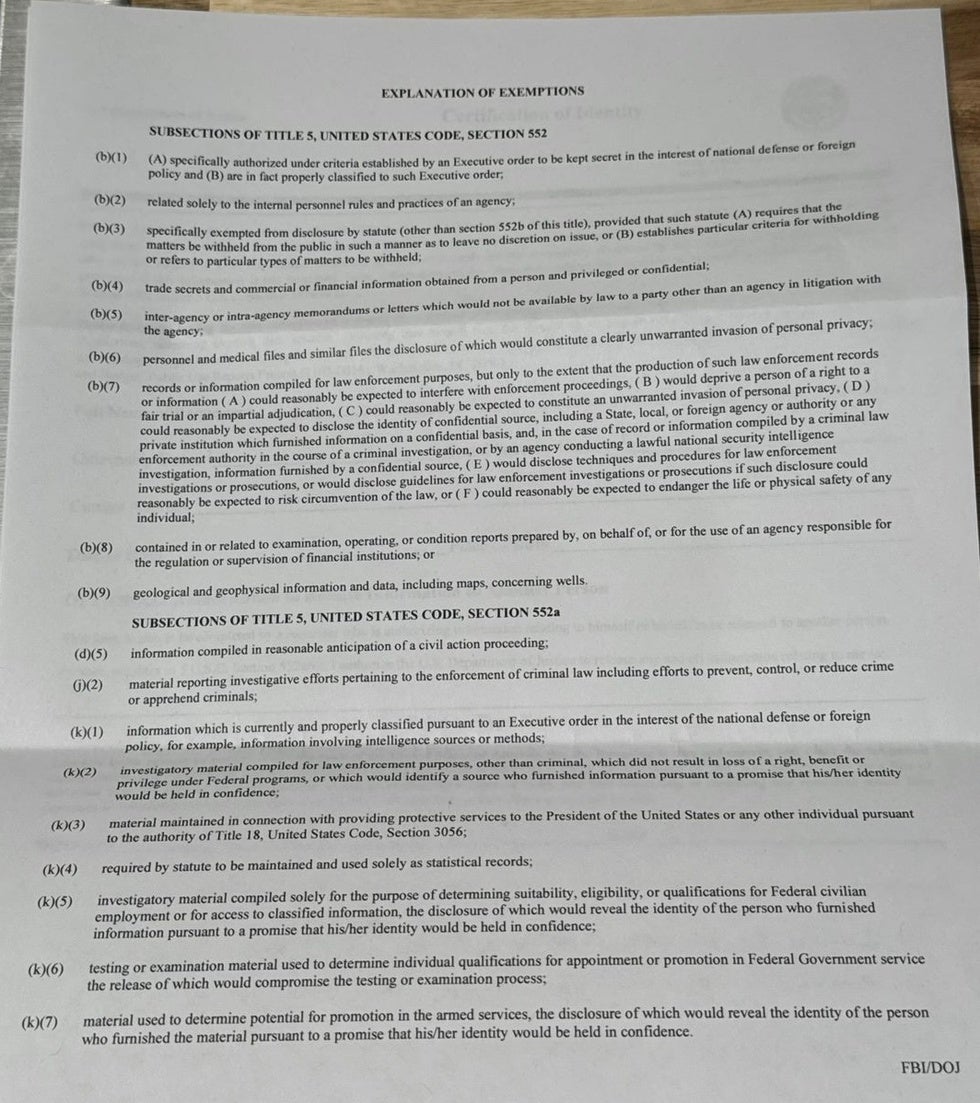
Your request for records can be denied for several reasons. There are (9) Exemptions and (3) Exclusions
Not all records are required to be released under the FOIA. Congress established nine exemptions from disclosure for certain categories of information to protect against certain harms, such as an invasion of personal privacy, or harm to law enforcement investigations. The FOIA authorizes agencies to withhold information when they reasonably foresee that disclosure would harm an interest protected by one of these nine exemptions.
The nine exemptions are described below.
- Exemption 1: Information that is classified to protect national security.
- Exemption 2: Information related solely to the internal personnel rules and practices of an agency.
- Exemption 3: Information that is prohibited from disclosure by another federal law.
- Exemption 4: Trade secrets or commercial or financial information that is confidential or privileged.
-
Exemption 5: Privileged communications within or between agencies, including those protected by the:
- Deliberative Process Privilege (provided the records were created less than 25 years before the date on which they were requested)
- Attorney-Work Product Privilege
- Attorney-Client Privilege
- Exemption 6: Information that, if disclosed, would invade another individual's personal privacy.
-
Exemption 7: Information compiled for law enforcement purposes that:
- 7(A). Could reasonably be expected to interfere with enforcement proceedings
- 7(B). Would deprive a person of a right to a fair trial or an impartial adjudication
- 7(C). Could reasonably be expected to constitute an unwarranted invasion of personal privacy
- 7(D). Could reasonably be expected to disclose the identity of a confidential source
- 7(E). Would disclose techniques and procedures for law enforcement investigations or prosecutions, or would disclose guidelines for law enforcement investigations or prosecutions if such disclosure could reasonably be expected to risk circumvention of the law
- 7(F). Could reasonably be expected to endanger the life or physical safety of any individual
- Exemption 8: Information that concerns the supervision of financial institutions.
- Exemption 9: Geological information on wells.
There are (3) Exclusions from FOIA.gov
Congress has provided special protection in the FOIA for three narrow categories of law enforcement and national security records. The provisions protecting those records are known as “exclusions.” The first exclusion protects the existence of an ongoing criminal law enforcement investigation when the subject of the investigation is unaware that it is pending and disclosure could reasonably be expected to interfere with enforcement proceedings. The second exclusion is limited to criminal law enforcement agencies and protects the existence of informant records when the informant's status has not been officially confirmed. The third exclusion is limited to the Federal Bureau of Investigation and protects the existence of foreign intelligence or counterintelligence, or international terrorism records when the existence of such records is classified. Records falling within an exclusion are not subject to the requirements of the FOIA. So, when an office or agency responds to your request, its response will encompass those records that are subject to the FOIA.
Public Records a YouTube Channel Creator, Podcaster or Blogger may want to request
Here are a few ideas (courtesy of ChaptGPT) that may help you SPICE UP your social media!!
1. Information on government spending related to a specific topic or industry that they can analyze and discuss on their channel.
2. Records of government contracts with private companies that could be examined for potential corruption or inefficiencies.
3. Reports on government investigations or audits that uncover potential wrongdoing or misconduct.
4. Documents related to proposed or enacted legislation that could impact their audience.
5. Data on government programs or policies that could be evaluated for effectiveness.
6. Emails or correspondence between government officials that shed light on decision-making processes.
7. Records of complaints or feedback submitted to government agencies that could highlight public concerns.
8. Data on socioeconomic trends or statistics relevant to their channel's content.
9. Information on environmental regulations or enforcement actions that may affect their audience.
10. Reports on public health issues or outbreaks that could be discussed on their channel.
11. Records of government meetings or hearings that could provide insight into policy discussions.
12. Documents related to infrastructure projects or transportation plans that could impact local communities.
13. Data on crime rates or law enforcement activities in a specific area.
14. Information on public education funding or academic performance metrics.
15. Reports on housing affordability or homelessness in a particular region.
16. Records of government contracts with media outlets or advertising agencies that could raise questions about bias or influence.
17. Data on immigration policies or enforcement actions that affect local communities.
18. Records of public records requests or lawsuits filed against government agencies.
19. Reports on labor rights violations or workplace safety issues.
20. Data on demographic trends or population changes that may be of interest to their audience.
21. Documents related to intellectual property laws or regulations that may impact creators or copyright holders.
22. Information on court cases or legal disputes involving copyright infringement or intellectual property rights.
23. Records of lobbying activities or political donations from copyright organizations or industry groups.
24. Data on public opinion or surveys related to copyright issues or piracy.
25. Reports on international agreements or treaties regarding intellectual property rights.
26. Documents related to digital rights management systems or technologies.
27. Information on fair use guidelines or exceptions to copyright law.
28. Reports on the impact of new technologies or platforms on copyright enforcement.
29. Data on the economic impact of copyright infringement on the creative industries.
30. Records of government attempts to regulate or police online content sharing platforms.
31. Documents related to copyright registration procedures and policies.
32. Information on the history and development of copyright law in the United States.
33. Reports on the implementation and effectiveness of copyright enforcement measures.
34. Data on copyright infringement trends and statistics.
35. Records of copyright infringement investigations or enforcement actions taken by the Copyright Office.
36. Documents related to copyright licensing agreements or royalties distribution.
37. Information on international copyright treaties and agreements signed by the United States.
38. Reports on the impact of digital technologies on copyright law and enforcement.
39. Data on the prevalence of orphan works and their effect on copyright holders.
40. Records of public comments or submissions on proposed changes to copyright regulations.
41. Documents related to government surveillance programs and privacy issues.
42. Information on national security policies or strategies that impact civil liberties.
43. Reports on cybersecurity threats or incidents affecting government agencies.
44. Data on environmental impact assessments for major infrastructure projects.
45. Records of government investigations into fraud or misconduct by public officials.
46. Documents related to the use of artificial intelligence or machine learning technologies by government agencies.
47. Information on government-funded scientific research or studies that could be discussed on their channel.
48. Reports on public health emergencies or pandemic preparedness efforts.
49. Data on election security measures or voter fraud investigations.
50. Records of government responses to natural disasters or emergencies.
51. Documents related to government contracts with defense contractors or military suppliers.
52. Information on border security policies or immigration enforcement actions.
53. Reports on government censorship or restrictions on free speech.
54. Data on government surveillance of social media platforms or online communications.
55. Records of complaints or whistleblower reports submitted to government oversight agencies.
56. Documents related to government funding for arts and cultural programs.
57. Information on public transportation projects or infrastructure improvements.
58. Reports on government efforts to combat human trafficking or organized crime.
59. Data on public access to government information or transparency initiatives.
60. Records of government interactions with foreign governments or international organizations.
61. Documents related to trademark applications and registrations for popular brands or products.
62. Information on trademark disputes or infringement cases adjudicated by the USPTO.
63. Reports on trademark trends or changes in registration rates for specific industries.
64. Data on international trademark agreements or treaties impacting U.S. businesses.
65. Records of trademark enforcement actions taken by the USPTO against counterfeit goods.
66. Documents related to trademark examiners' decision-making processes and criteria.
67. Information on trademark licensing agreements or royalty arrangements.
68. Reports on the impact of e-commerce platforms on trademark protection and enforcement.
69. Data on trademark infringement on social media platforms or online marketplaces.
70. Records of government initiatives to combat trademark piracy or counterfeiting.
71. Documents related to trademark policy discussions or proposed regulatory changes.
72. Information on trademark application fees or processing times at the USPTO.
73. Reports on trademark registration statistics for different types of marks (e.g., word marks, logos, slogans).
74. Data on the use of trademarks in advertising and marketing campaigns.
75. Records of trademark disputes resolved through mediation or alternative dispute resolution.
76. Documents related to trademark dilution cases or challenges to famous marks.
77. Information on trademark protection for emerging technologies or digital assets.
78. Reports on trademark infringement in global markets and cross-border enforcement actions.
79. Data on trademark renewal rates or abandonment trends for registered marks.
80. Records of government outreach programs or educational resources on trademark rights and enforcement.
81. Documents related to trade secret theft investigations conducted by federal law enforcement agencies.
82. Information on government efforts to combat economic espionage targeting trade secrets.
83. Reports on trade secret litigation cases involving government contractors or defense industry companies.
84. Data on trade secret protection measures implemented by government agencies to safeguard sensitive information.
85. Records of trade secret registration programs or initiatives to encourage innovation and intellectual property rights.
86. Documents related to international trade secret agreements or cooperation among nations to address intellectual property theft.
87. Information on trade secret policy discussions or proposed changes to intellectual property laws.
88. Reports on trade secret misappropriation incidents or cybersecurity breaches affecting government agencies.
89. Data on the economic impact of trade secret theft on U.S. businesses and industries.
90. Records of trade secret enforcement actions taken by federal agencies to prosecute intellectual property violations.
91. Documents related to trade secret disclosure requirements for government contractors or subcontractors.
92. Information on trade secret protection best practices recommended by federal agencies.
93. Reports on trade secret litigation trends and court decisions that shape intellectual property law.
94. Data on trade secret registration statistics and trends in the technology sector or emerging industries.
95. Records of government-sponsored research or studies on the importance of trade secrets to national security and economic competitiveness.
96. Information on trade secret training programs or resources available to government employees and contractors.
97. Reports on trade secret theft prevention strategies and cybersecurity safeguards recommended by federal agencies.
98. Data on trade secret licensing agreements or deals involving government technology transfer programs.
99. Records of trade secret disputes resolved through arbitration or mediation processes supported by federal agency programs.
100. Documents related to government initiatives to promote trade secret protection and innovation in key industries such as defense, healthcare, and technology.
1. Severe weather event reports or investigations conducted by the National Weather Service.
2. Historical weather data for specific regions or time periods from the National Oceanic and Atmospheric Administration (NOAA).
3. Records of climate change research or projections from the Environmental Protection Agency (EPA).
4. Information on emergency management plans or responses to natural disasters from the Federal Emergency Management Agency (FEMA).
5. Reports on air quality monitoring or pollution levels from the Environmental Protection Agency (EPA).
6. Data on extreme weather events or trends from the National Climatic Data Center.
7. Documents related to government-funded weather research projects or studies.
8. Information on weather forecasting technologies or advancements from the National Weather Service.
9. Reports on the impact of climate change on vulnerable communities from the U.S. Global Change Research Program.
10. Data on weather-related accidents or fatalities from the National Transportation Safety Board.
11. Records of government communications or warnings issued during severe weather events.
12. Documents related to weather modification or cloud seeding programs from the National Center for Atmospheric Research.
13. Information on weather radar systems or technology development from the National Severe Storms Laboratory.
14. Reports on the effects of weather patterns on agriculture or food production from the U.S. Department of Agriculture.
15. Data on coastal erosion or sea level rise from the U.S. Geological Survey.
16. Records of government actions taken to mitigate the impact of climate change on infrastructure from the Department of Transportation.
17. Documents related to weather-related disasters or emergencies declared by the President of the United States.
18. Information on weather monitoring satellites or space weather research from NASA.
19. Reports on the economic impact of severe weather events on local communities from the Department of Commerce.
20. Data on weather-related insurance claims or payouts from the Federal Emergency Management Agency (FEMA).
26. Reports on crime statistics and trends from the Federal Bureau of Investigation (FBI).
27. Data on federal law enforcement activities and arrests from the Department of Justice (DOJ).
28. Documents related to high-profile criminal cases or investigations handled by federal agencies.
29. Information on prison population demographics and inmate rights from the Federal Bureau of Prisons.
30. Records of government surveillance programs or warrant applications related to criminal investigations.
31. Reports on the effectiveness of crime prevention programs implemented by federal agencies.
32. Data on the impact of drug trafficking or organized crime on communities from the Drug Enforcement Administration (DEA).
33. Records of government efforts to combat human trafficking or cybercrime from the Department of Homeland Security.
34. Documents related to forensic science research or advancements in criminal investigations.
35. Information on federal sentencing guidelines and criminal justice reforms from the U.S. Sentencing Commission.
36. Reports on white-collar crime investigations or financial fraud cases handled by federal agencies.
37. Data on police misconduct complaints or internal investigations from the Department of Justice.
38. Records of government initiatives to address gun violence or domestic terrorism threats.
39. Information on criminal justice policy discussions or proposed legislative changes at the federal level.
40. Documents related to the use of technology in criminal investigations or surveillance operations.
41. Reports on the impact of mental health and substance abuse issues on crime rates from the Substance Abuse and Mental Health Services Administration.
42. Data on the recidivism rates of federal offenders released from prison from the Bureau of Justice Statistics.
43. Records of government responses to civil rights violations or hate crimes from the Civil Rights Division of the Department of Justice.
44. Information on federal resources available to victims of crime and their families from the Office for Victims of Crime.
45. Reports on the prosecution of international crimes and support for global justice initiatives from the Office of Global Criminal Justice.
Resources
- Where to send your FOIA requests: https://www.foia.gov/agency-search.html
- Executive agencies subject to FOIA: https://foia.wiki/wiki/Entities_Subje...
- The 9 FOIA exemptions: https://www.justice.gov/d9/what_are_t...
Contact a FOIA Request Law Firm to Assist with your Request
If you need help with a FOIA or California public records request, or you are a Social Media Influencer, YouTube Channel Creator, Podcaster, Blogger or Journalist, call us if you are dealing with legal issues requiring an experienced IP and media law firm. Contact us at (877) 276-5084 or fill out our contact form for more information.

