
THE LEGAL SIDE OF CANVA: WHAT BUSINESSES NEED TO KNOW BEFORE USING CANVA DESIGNS, LOGOS, AND IMAGES
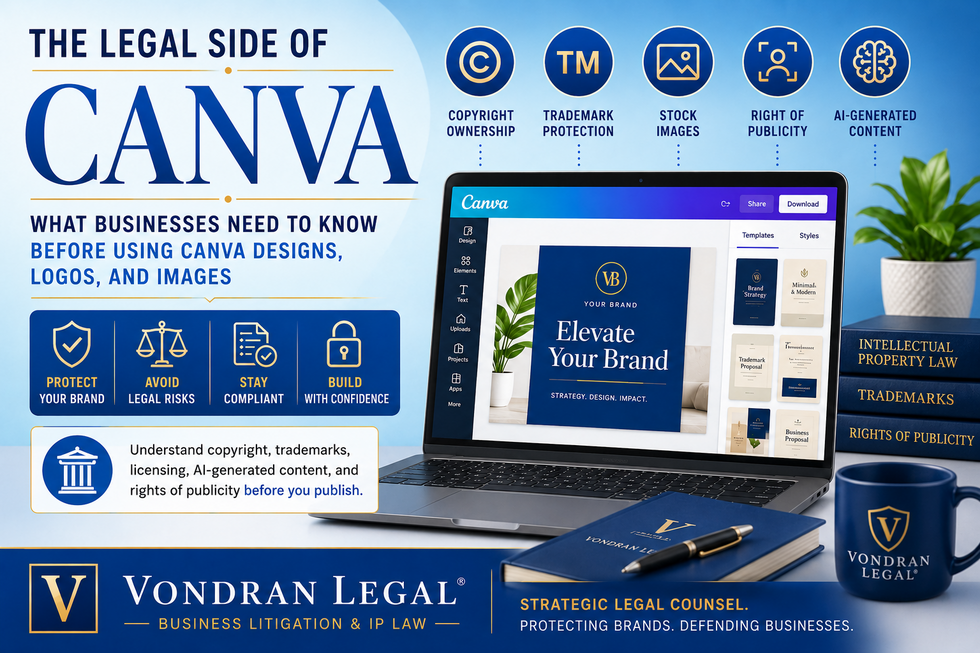
CANVA IS EVERYWHERE — BUT ARE YOU USING IT LEGALLY?
Canva has become one of the most widely used design platforms in the world. Entrepreneurs, influencers, startups, restaurants, law firms, content creators, and established businesses use Canva to create logos, social media graphics, websites, advertisements, presentations, and marketing materials.
The platform is fast, affordable, and easy to use. However, many users make a potentially dangerous assumption that “if I create it, I own it.”
While Canva provides powerful design tools and broad usage rights, legal issues can arise when businesses build brands around templates, stock images, shared graphics, AI-generated content, or other third-party assets.
Questions involving copyright ownership, trademark protection, licensing restrictions, AI-generated content, and right of publicity laws are becoming increasingly common as businesses rely more heavily on online design platforms.
Before investing significant time and money into a brand, it is worth understanding where potential legal risks may exist.
DO YOU OWN THE DESIGNS YOU CREATE IN CANVA?
Many business owners assume that creating a design automatically gives them complete ownership rights. The legal reality is often more nuanced.
Canva generally provides users with broad rights to use the designs they create on the platform. However, a single design may contain multiple elements originating from different sources, including:
- Canva templates
- Canva stock images
- Canva graphics and icons
- Canva fonts
- Uploaded user content
- AI-generated content
As a result, questions regarding ownership and licensing rights may arise depending on the content incorporated into the final design and the applicable platform terms.
This distinction may not seem significant when creating a social media post. However, it can become more important when a company invests heavily in branding, seeks trademark protection, licenses intellectual property, attracts investors, or prepares for a business sale.
Because platform terms and licensing provisions may change over time, businesses should review the most current Canva terms and applicable content licenses before relying on a particular asset for significant commercial purposes.
CAN YOU TRADEMARK A CANVA-CREATED LOGO?
Many businesses use Canva to create logos because it is inexpensive, convenient, and produces professional-looking results.
However, trademark law focuses on whether a logo functions as a distinctive source identifier.
Potential issues may arise when a logo incorporates graphics, icons, or design elements that are widely available to other Canva users. In some situations, the use of common or shared design assets may make trademark registration or enforcement more challenging.
For example, a business owner may create a logo using a popular Canva graphic and later discover that similar elements appear in branding used by other businesses. While this does not automatically prevent trademark protection, it is one factor that may be considered when evaluating the strength and distinctiveness of a mark.
Potential concerns may arise when logos incorporate:
- Shared Canva graphics
- Stock icons
- Template-based elements
- Common design features available to other users
Businesses seeking strong trademark protection may wish to consider developing more customized branding assets as their businesses grow.
A trademark attorney can help evaluate whether a particular logo is likely to qualify for registration and whether additional branding modifications may strengthen the mark.
ARE CANVA STOCK IMAGES ALWAYS SAFE TO USE?
Not necessarily.
Many users assume that if an image appears in Canva's library, it can be used freely for any purpose. While Canva licenses a large collection of stock photography and creative assets, businesses should still understand how those assets may be used.
Potential considerations may include:
- Advertising restrictions
- Commercial use limitations
- Sensitive subject matter restrictions
- Licensing conditions
- Potential endorsement concerns
For example, a business may use a licensed stock image in marketing materials. While the image itself may be properly licensed, legal concerns may arise if the advertisement creates a misleading impression regarding endorsement, sponsorship, affiliation, or association with the person depicted.
For that reason, businesses should carefully review applicable licensing terms and evaluate how an image is being presented within the overall context of an advertisement or campaign.
CAN CANVA IMAGES CREATE RIGHT OF PUBLICITY PROBLEMS?
One area frequently overlooked by businesses involves right of publicity laws.
The right of publicity generally protects individuals from unauthorized commercial exploitation of their name, image, likeness, voice, or identity.
A common mistake occurs when businesses use stock photography in a manner that suggests endorsement, sponsorship, or affiliation.
For example, a licensed stock image may be legally available for use. However, if the surrounding advertisement implies that the person pictured personally supports, recommends, or is affiliated with the product or service being advertised, potential legal issues may arise.
Potential claims may include:
- False endorsement
- Misappropriation of likeness
- Unauthorized commercial association
- State right of publicity violations
California businesses should exercise particular caution. California maintains some of the strongest right of publicity protections in the country, making these issues especially important for advertisers, influencers, content creators, and online businesses.
Businesses should carefully evaluate how images are used within the broader context of a marketing campaign, particularly when the advertisement could create a misleading impression regarding endorsement or affiliation.
WHAT ABOUT CANVA AI-GENERATED CONTENT?
Artificial intelligence continues to transform how businesses create content.
Canva now offers AI-powered tools capable of generating images, graphics, written content, and other creative assets in seconds.
While these tools provide tremendous efficiency, they also create legal questions that remain unsettled.
Businesses should consider issues such as:
- Who owns AI-generated content?
- Can AI-generated works receive copyright protection?
- Was the AI trained using copyrighted materials?
- Could generated content resemble existing works?
- Can AI-generated logos serve as protectable trademarks?
This area of law is evolving rapidly.
Businesses relying heavily on AI-generated content should remain mindful that today's accepted practices may face increased legal scrutiny as courts, regulators, and lawmakers continue to address emerging AI-related disputes.
As with many emerging technologies, legal outcomes often depend on specific facts, platform terms, and the evolving state of the law.
BEST PRACTICES FOR BUSINESSES USING CANVA
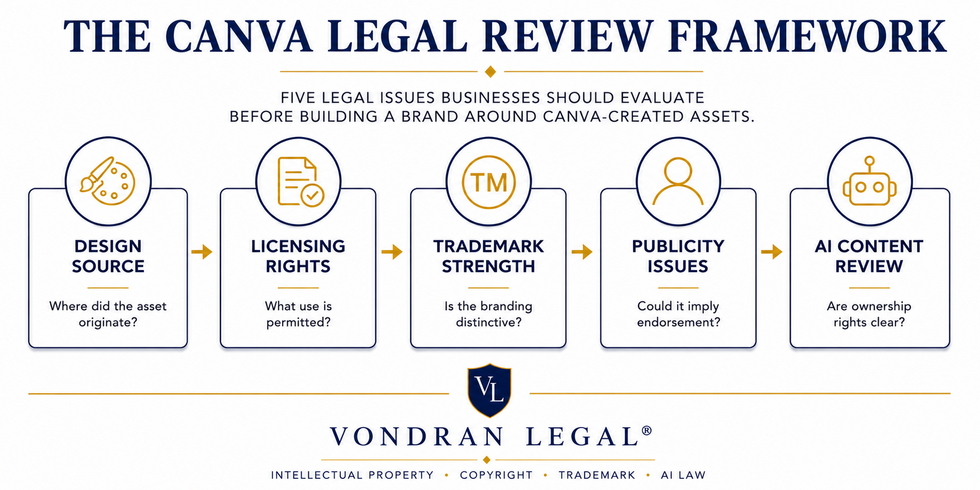
Canva can be an extremely valuable tool for businesses, startups, content creators, and entrepreneurs. However, companies should avoid treating Canva assets as a substitute for a broader intellectual property strategy.
Before investing heavily in a logo, advertising campaign, website, or brand identity, businesses should take time to understand where the underlying design elements originated, what rights accompany those assets, and whether any licensing restrictions may apply. Particular attention should be paid to logos intended for trademark protection, stock images used in advertising, and AI-generated content incorporated into commercial materials.
Businesses that maintain records regarding design sources, licensing rights, and branding decisions may be better positioned to address future questions involving ownership, enforcement, licensing, investment due diligence, or business sales. Taking a proactive approach at the outset can often help minimize legal risk and avoid costly disputes later.
THE BOTTOM LINE
Canva has democratized design and made professional-quality branding accessible to businesses of all sizes.
However, convenience should not be confused with legal certainty.
Questions involving copyright ownership, trademark rights, stock image licensing, publicity rights, and AI-generated content can all arise when businesses rely on Canva-created materials.
Understanding these issues before launching a brand, advertising campaign, or new business venture may help businesses avoid costly disputes and better protect their intellectual property assets.
As always, the analysis will depend on the specific facts, the content involved, the applicable licensing terms, and the goals of the business.
CONTACT AN INTELLECTUAL PROPERTY ATTORNEY
If your business has questions regarding Canva-created logos, trademark registration, copyright ownership, stock image licensing, AI-generated content, right of publicity concerns, or related intellectual property matters, contact Vondran Legal® for a confidential consultation.
Our firm assists businesses, entrepreneurs, content creators, influencers, and intellectual property owners with branding, licensing, copyright, trademark, digital media, and related intellectual property disputes throughout the United States.
