
WHAT YOU DO IN THE FIRST 24–48 HOURS CAN MAKE ALL THE DIFFERENCE
Receiving a demand letter can be unsettling. Whether it arrives by certified mail, email, or through your attorney, your first reaction may be panic, anger, or confusion. Many people immediately assume they are about to be sued, while others convince themselves the letter is just a scare tactic that can safely be ignored.
Neither reaction is a good strategy.
A demand letter is often the first step in a legal dispute. It gives the recipient notice of the claims being asserted and typically offers an opportunity to resolve the matter before litigation begins. While not every demand letter results in a lawsuit, how you respond can significantly influence what happens next.
At Vondran Legal®, we have represented both individuals and businesses involved in intellectual property disputes, business litigation, entertainment matters, trademark conflicts, copyright claims, trade secret cases, and internet law issues. Over the years, we have seen the same costly mistakes repeated time and time again.
Here are five of the biggest.
MISTAKE #1: IGNORING THE LETTER
Many recipients believe that if they ignore the letter, the problem will disappear.
Unfortunately, that is rarely the case.
A demand letter is often sent when the opposing party seeks to resolve the dispute without immediately filing a lawsuit. If they receive no response, they may conclude that litigation is the only remaining option.
Ignoring the letter can also:
- Eliminate opportunities for early settlement.
- Increase legal expenses.
- Cause important deadlines are passing.
- It makes you appear unreasonable if the dispute later reaches court.
Even if you believe the allegations are false, they should not be ignored.
MISTAKE #2: RESPONDING OUT OF ANGER
Some recipients immediately fire back an emotional email. Others begin arguing on social media. Some even threaten the sender with their own legal action before understanding the issues. These emotional responses often create more problems than they solve.
Anything you write may later become evidence in litigation. Statements made in frustration can be taken out of context and interpreted as admissions.
Before responding:
- Carefully read the letter
- Gather the relevant facts.
- Review any contracts or communications.
- Consult legal counsel when appropriate.
A measured, strategic response is almost always more effective than an emotional one.
MISTAKE #3: DESTROYING OR ALTERING EVIDENCE
When people fear being sued, some make the serious mistake of deleting emails, text messages, photographs, social media posts, business records, or computer files.
This can create an entirely new legal problem.
Courts expect parties to preserve relevant evidence once litigation is reasonably anticipated. Destroying evidence—sometimes referred to as spoliation of evidence—can result in:
- Court sanctions.
- Monetary penalties.
- Adverse jury instructions.
- Reduced credibility.
- Serious damage to your legal defense.
Instead of deleting information, preserve it.
Gather documents, save communications, and organize your records before they are lost.
MISTAKE #4: ADMITTING LIABILITY TOO QUICKLY
Many people believe that apologizing or trying to "make things right" will quickly end the dispute.
Unfortunately, admissions made before understanding the legal issues may later be used against you. Even seemingly harmless statements can complicate negotiations.
This does not mean you should refuse to negotiate.
It simply means you should fully understand: What claims are being made, whether those claims have legal merit, what defenses may exist, and what potential damages are being sought.
Good negotiations begin with good information.
MISTAKE #5: WAITING TOO LONG TO SPEAK WITH AN ATTORNEY
One of the most expensive mistakes is waiting until after a lawsuit has already been filed.
By that point:
- Deadlines may be approaching.
- Evidence may have disappeared.
- Settlement opportunities may have been lost.
- Litigation costs may already be increasing.
An experienced attorney can often evaluate:
- Whether the demand letter has legal merit.
- The strength of the opposing party's claims.
- Possible defenses.
- Negotiation strategies.
- Whether settlement or litigation is the better path.
Obtaining legal advice early often provides more options—not fewer.
NOT EVERY DEMAND LETTER IS LEGALLY VALID
Receiving a demand letter does not automatically mean you are liable. While some demand letters are supported by strong legal claims and substantial evidence, others may exaggerate the facts, demand unreasonable sums of money, or rely on legal theories that may ultimately fail in court.
Every dispute is different, and the strength of a claim depends on the specific facts, applicable law, and available evidence. For that reason, it is important to have any demand letter carefully evaluated before responding. A thorough legal analysis can help determine whether the claims have merit, identify potential defenses, and develop a strategy that best protects your rights and interests.
WHAT SHOULD YOU DO AFTER RECEIVING A DEMAND LETTER?
If you receive a demand letter, consider these practical steps:
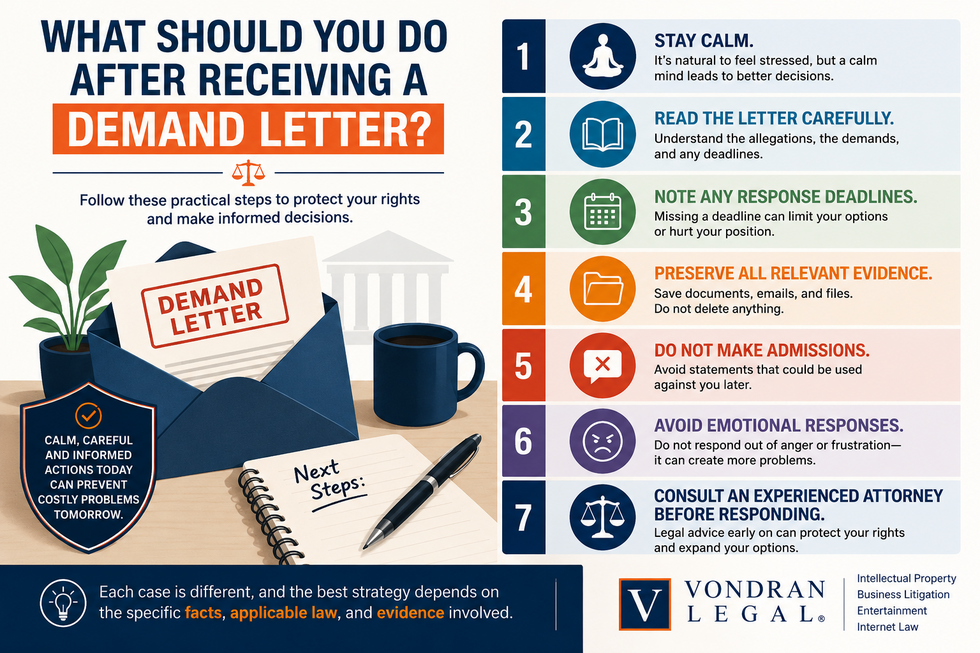
- Stay calm.
- Read the letter carefully.
- Note any response deadlines.
- Preserve all relevant evidence.
- Do not make admissions.
- Avoid emotional responses.
- Consult an experienced attorney before responding.
Each case is different, and the best strategy depends on the specific facts, applicable law, and evidence involved.
THE BOTTOM LINE
A demand letter is often the opening chapter of a legal dispute—not the end of one.
The decisions you make during the first few days can affect settlement opportunities, litigation costs, and ultimately the outcome of the case.
Whether the dispute involves copyright infringement, trademark claims, breach of contract, trade secrets, business disputes, internet law, entertainment matters, or other complex civil litigation, responding strategically rather than emotionally can make a significant difference.
If you have received a demand letter and are unsure how to proceed, obtaining experienced legal guidance early may help protect your rights, preserve important defenses, and position you for the best possible outcome.
