
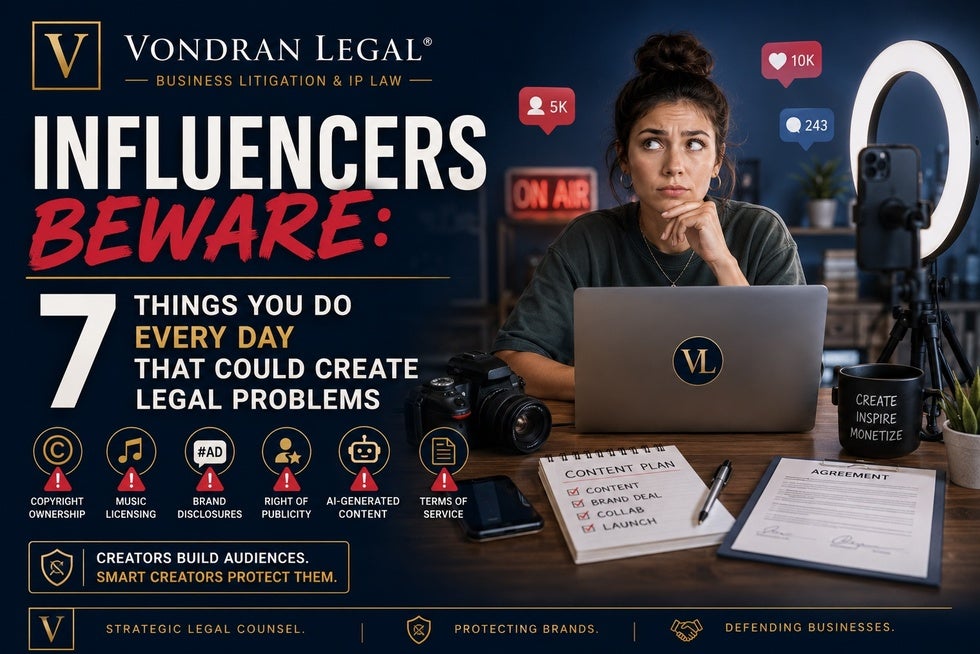
VONDRAN LEGAL® - INFLUENCERS BEWARE: 7 THINGS YOU DO EVERY DAY THAT COULD CREATE LEGAL PROBLEMS
YOU DON'T HAVE TO BE SUED TO HAVE A PROBLEM
Many influencers assume legal issues only affect celebrities with millions of followers.
Not true.
Whether you have 5,000 followers or 5 million, the moment you begin monetizing content, accepting sponsorships, promoting products, selling courses, or building a personal brand, you are operating a business.
And businesses face legal risk.
Some of the most common legal issues creators encounter stem from routine activities performed every day without a second thought. The good news is that many of these risks can be reduced—or avoided altogether—with proper planning and a basic understanding of the legal landscape.
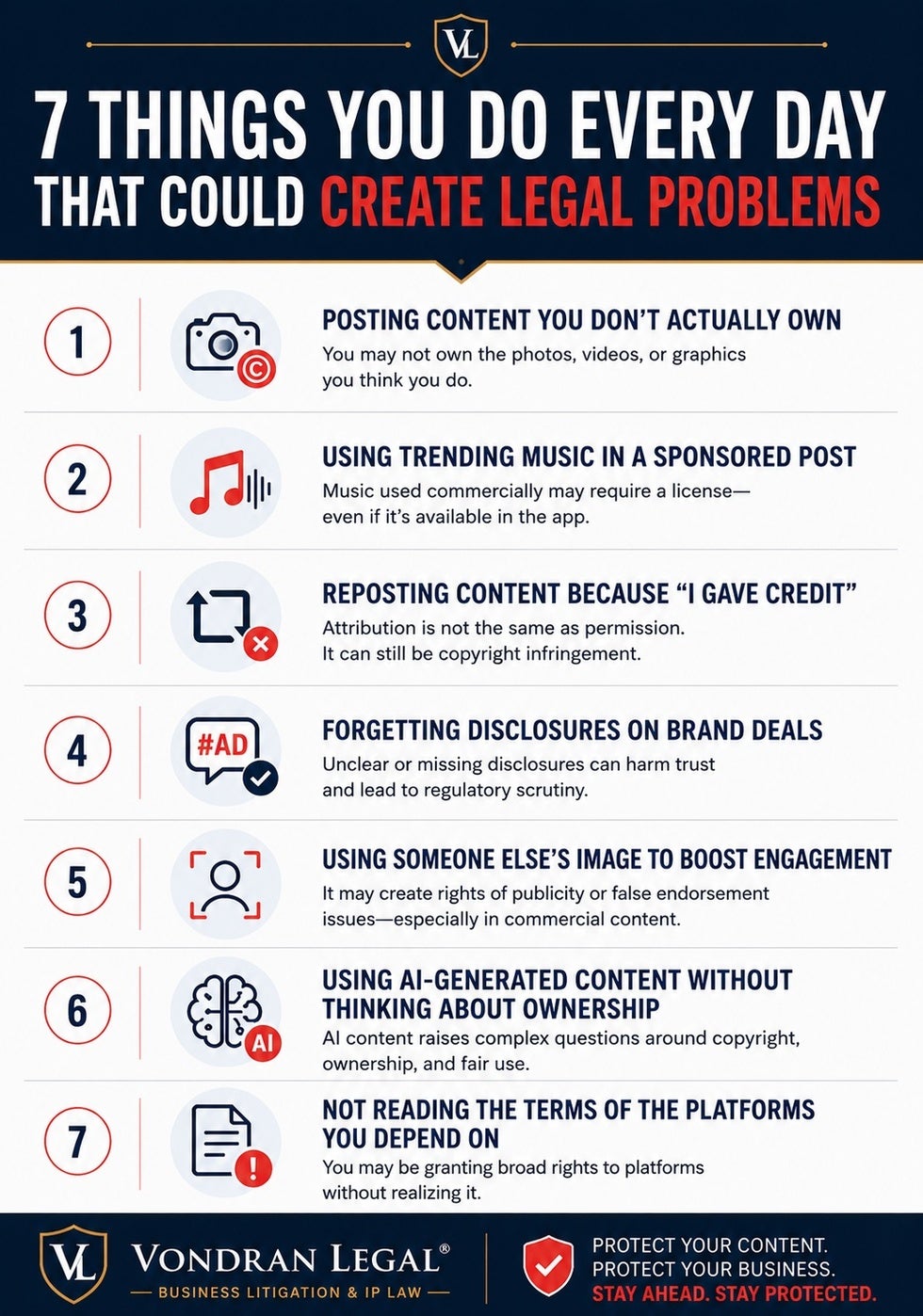
1. POSTING CONTENT YOU DON'T ACTUALLY OWN
You hired the photographer.
You paid for the video shoot.
You appear in the content.
That means you own it, right?
Not necessarily.
Many influencers are surprised to learn that photographers, videographers, editors, creative agencies, and other content creators often retain copyright ownership of their work unless there is a written agreement expressly transferring those rights.
This issue frequently surfaces when a creator later attempts to license content, launch merchandise, register copyrights, enforce intellectual property rights, or stop others from copying valuable brand assets.
Why This Matters
What starts as a simple photoshoot can eventually become a core business asset. Influencers should understand who owns the content that forms the foundation of their brand.
2. USING TRENDING MUSIC IN A SPONSORED POST
Trending audio can be a powerful engagement tool.
However, licensing rights that may apply to personal or non-commercial content do not necessarily extend to sponsored content, affiliate marketing campaigns, product endorsements, or other commercial uses.
Many creators do not consider these licensing issues until a dispute arises.
Why This Matters
The fact that music is available through a social media platform does not automatically mean all commercial uses are authorized.
4. FORGETTING DISCLOSURES ON BRAND DEALS
The influencer economy has matured significantly.
Brands, consumers, and regulators increasingly expect transparency regarding paid relationships, endorsements, and sponsored content.
Yet many creators continue to rely on disclosures that are difficult to locate, easy to miss, or insufficiently clear.
Why This Matters
Trust is one of the most valuable assets an influencer possesses. Clear and conspicuous disclosures can help protect audience relationships while reducing potential regulatory and reputational risks.
5. USING SOMEONE ELSE'S IMAGE TO BOOST ENGAGEMENT
Many influencers assume that if an image is already circulating online, it is free to repost.
However, using another person's image—including a celebrity photograph, model image, professional athlete photograph, or viral social media post—can create legal exposure, particularly when the content is used to promote a product, service, brand, or commercial venture.
Depending on the circumstances, unauthorized use of another person's name, image, likeness, identity, or persona may give rise to claims involving rights of publicity, false endorsement, unfair competition, or related intellectual property issues.
Why This Matters
The legal question is often not whether you intended to imply an endorsement. The question is whether consumers could reasonably believe an endorsement, sponsorship, affiliation, or association exists.
7. NOT READING THE TERMS OF THE PLATFORMS YOU DEPEND ON
Most influencers have never carefully reviewed the Terms of Use governing the platforms on which they build their businesses.
Yet many creators have invested years developing valuable content libraries and audiences on those platforms.
One point that frequently surprises creators is that posting content to a platform such as Instagram generally does not transfer ownership of the content itself. However, users typically grant the platform a broad license to host, store, reproduce, distribute, display, and otherwise use the content as necessary to operate and provide its services.
Ownership vs. Permission
Ownership and licensing are not the same thing.
A creator may retain ownership of content while simultaneously granting significant usage rights to the platform.
Understanding that distinction is important for influencers whose content represents a valuable business asset.
THE BIGGER PICTURE
Many influencers view themselves primarily as content creators.
Successful influencers should also view themselves as business owners.
Every photograph, video, Reel, Story, sponsorship agreement, affiliate campaign, collaboration, and licensing arrangement can potentially create intellectual property rights, contractual obligations, advertising compliance issues, or other legal considerations.
The creators who achieve long-term success are often those who understand not only how to build an audience but also how to protect the business they are building.
ABOUT VONDRAN LEGAL®
At Vondran Legal®, we regularly monitor developments involving copyright law, trademark law, rights of publicity, influencer marketing, social media disputes, artificial intelligence, and other emerging issues affecting the creator economy.
As content creation increasingly intersects with intellectual property and technology, understanding legal risk has never been more important.
If you have questions regarding copyright ownership, influencer agreements, social media disputes, licensing issues, brand protection, or related matters, contact Vondran Legal® to discuss your situation.

