
WHY THE LIVE NATION–TICKETMASTER CASE MATTERS
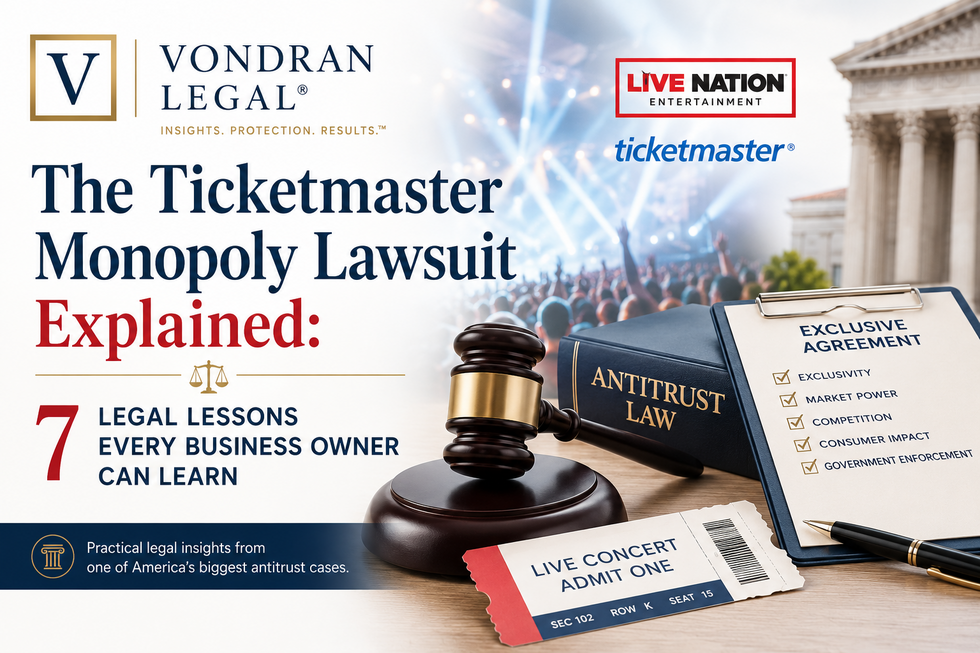
If you've tried to buy concert tickets in recent years, chances are you've experienced high fees, limited ticket availability, or frustrating purchasing processes. Those frustrations have become the backdrop for one of the most closely watched antitrust lawsuits in the United States.
The U.S. Department of Justice, joined by numerous states, has sued Live Nation Entertainment and Ticketmaster, alleging that the companies have unlawfully maintained monopoly power in the live concert industry. Among other allegations, the government claims the companies used exclusive agreements and other business practices to limit competition.
Whether the government ultimately prevails remains to be seen. But regardless of the outcome, the lawsuit offers valuable lessons for business owners, entrepreneurs, entertainment professionals, and anyone negotiating commercial agreements.
At Vondran Legal®, we believe high-profile litigation often provides an opportunity to better understand the legal principles that affect businesses of every size.
1. HAVING A LARGE MARKET SHARE IS NOT AUTOMATICALLY ILLEGAL
One of the biggest misconceptions surrounding antitrust law is that becoming the biggest company in an industry is against the law.
It isn't.
The law generally encourages businesses to compete, innovate, and grow. Companies can become market leaders through better products, superior service, innovation, or efficient operations.
The legal question is often not how large a company becomes, but how it maintains that position.
Government regulators may examine whether certain business practices unfairly restrict competition or prevent competitors from entering the market.
Practice Takeaway
Success alone does not create legal liability. Business practices surrounding that success may receive greater scrutiny as a company grows.
2. CONTRACTS CAN BECOME THE CENTERPIECE OF MAJOR LITIGATION
Many headlines focus on ticket prices or consumer complaints. Lawyers often focus on something else: the contracts.
Exclusive agreements, licensing arrangements, vendor relationships, venue contracts, and long-term commercial partnerships frequently become central pieces of evidence in complex business litigation.
Businesses should never assume that an "industry standard" agreement is automatically low risk.
Before signing any significant contract, consider questions such as:
- How long does the agreement last?
- Is the arrangement exclusive?
- Can either party terminate early?
- Are there meaningful renewal rights?
- Does the contract limit future business opportunities?
A carefully negotiated contract today may help avoid expensive litigation tomorrow.
3. EXCLUSIVE AGREEMENTS ARE COMMON—BUT THEY MUST BE DRAFTED CAREFULLY
Exclusive agreements exist throughout the business world.
Examples include:
- Distribution agreements
- Licensing deals
- Software partnerships
- Entertainment contracts
- Venue agreements
- Franchise relationships
Exclusivity is not inherently unlawful. In many industries, exclusive arrangements promote investment, stability, and long-term business relationships.
However, when exclusive agreements significantly reduce competition or make it difficult for competitors to enter a market, they may attract regulatory attention.
Every exclusive contract should be evaluated considering the surrounding business circumstances.
4. REGULATORY SCRUTINY OFTEN INCREASES AS COMPANIES GROW
Many startups focus almost exclusively on growth.
That's understandable.
But as companies become larger and more influential within an industry, regulators may begin examining business practices that previously received little attention.
This doesn't mean successful companies have done anything wrong.
It does mean that documentation, compliance, contract management, and internal legal review become increasingly important as organizations expand.
Proactive legal guidance can often reduce future business risk.
5. CONSUMER COMPLAINTS CAN BECOME GOVERNMENT INVESTIGATIONS
Many major enforcement actions begin long before a lawsuit is filed.
Consumer complaints, industry concerns, competitor allegations, and market investigations can eventually lead to regulatory review.
Businesses should view customer complaints as more than public relations issues.
Sometimes they reveal operational problems, contractual weaknesses, or compliance issues that deserve attention before they escalate.
Listening to customer feedback—and responding appropriately—can be an important part of legal risk management.
6. EVERY BUSINESS SHOULD PERIODICALLY REVIEW ITS COMMERCIAL AGREEMENTS
Many companies sign contracts and rarely revisit them.
That can be a costly mistake.
Markets evolve.
Laws change.
Business relationships shift.
Periodic legal review of important commercial agreements may help identify outdated provisions, overly restrictive clauses, or unnecessary risks before disputes arise.
A contract that made sense five years ago may no longer reflect today's business realities.
7. HIGH-PROFILE LAWSUITES ARE A REMINDER THAT PREVENTION IS OFTEN LESS EXPENSIVE THAN LITIGATION
Whether your business operates in entertainment, technology, e-commerce, manufacturing, or professional services, the underlying lesson remains the same:
Legal planning is generally less expensive than legal disputes.
Thoughtfully drafted contracts, clearly defined business relationships, and periodic legal review can help reduce uncertainty and strengthen a company's long-term position.
No business is immune from legal challenges, but proactive planning often places companies in a far better position if disputes arise.
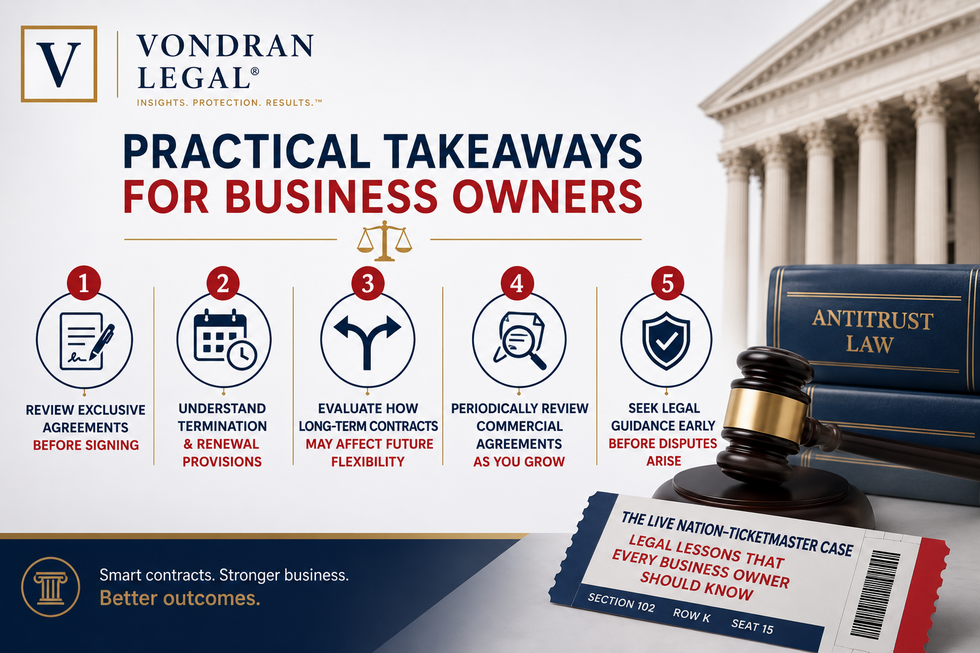
PRACTICAL TAKEAWAYS FOR BUSINESS OWNERS
The Live Nation–Ticketmaster litigation is about more than concerts and ticket sales. It highlights how contracts, competition, and business strategy can intersect with the law.
Business owners should consider:
- Reviewing exclusive agreements before signing.
- Understanding termination and renewal provisions.
- Evaluating how long-term contracts may affect future flexibility.
- Periodically reviewing commercial agreements as the business grows.
- Seeking legal guidance before disputes arise rather than after litigation begins.
High-profile lawsuits often begin with ordinary business decisions made years earlier. Taking the time to evaluate those decisions on the front end may help reduce legal risk and protect long-term business objectives.
FINAL THOUGHTS
Vondran Legal® represents businesses, entrepreneurs, content creators, technology companies, and entertainment professionals in a variety of commercial and intellectual property matters, including contract drafting and negotiation, business disputes, copyright and trademark matters, licensing, and entertainment law.
If your business is entering an important commercial relationship or negotiating a significant agreement, obtaining legal advice before signing may help minimize risk and protect your interests in the future.
