
Emerging AI Copyright Law: What you need to know!
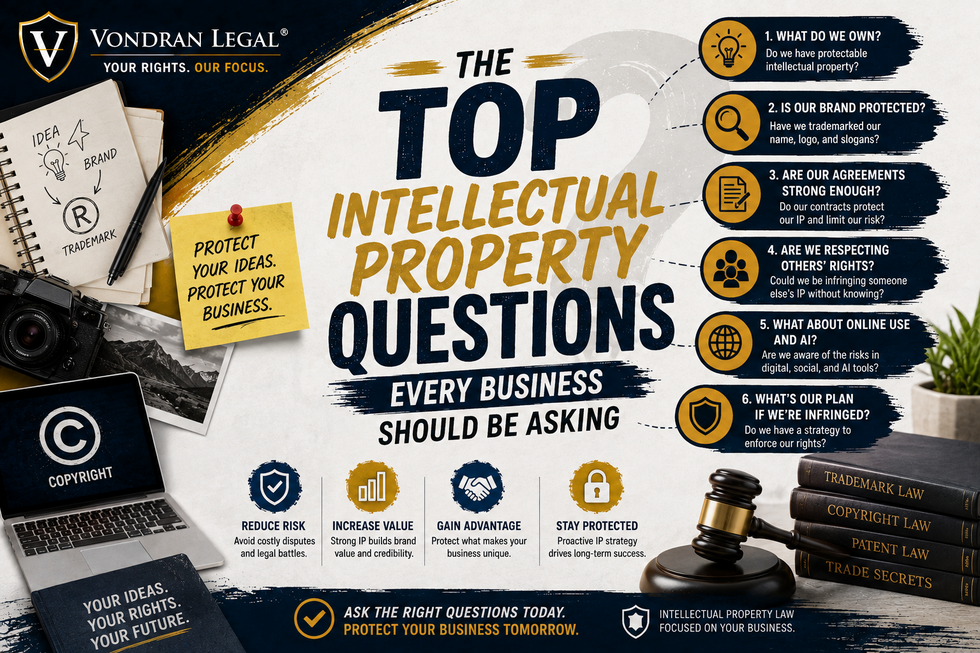
Artificial intelligence has rapidly evolved from an experimental technology into a core business tool. Companies now use AI to create marketing materials, software code, product designs, training manuals, advertising copy, music, videos, and images—often in a matter of seconds. While these technologies offer significant opportunities, they also present a growing number of legal questions that remain unsettled.
For businesses adopting AI, understanding the intersection of artificial intelligence and intellectual property law has become increasingly important. Below are some of the key legal issues organizations should consider before integrating AI into their daily operations.
1. Who Owns AI-Generated Content?
One of the most frequently asked questions is whether AI-generated content can be protected under U.S. copyright law.
Current guidance from the U.S. Copyright Office generally requires meaningful human authorship before copyright protection will attach. While AI can assist in the creative process, works generated with minimal human creative involvement may not qualify for copyright protection. As a result, businesses should carefully document the role that human creators play in developing, editing, selecting, and refining AI-generated works.
The practical takeaway is that companies should not assume that every AI-generated asset can be registered or enforced as a copyrighted work.
2. Can AI-Generated Content Infringe Someone Else's Copyright?
Ownership is only part of the equation.
Businesses must also consider whether AI-generated output incorporates or closely resembles copyrighted material owned by third parties. Although many AI systems are designed to generate original content, there remains a risk that outputs may be substantially similar to existing works, particularly when dealing with images, music, software code, or literary content.
Organizations should implement review procedures before commercially publishing AI-generated content, especially where the material will be used in advertising, product development, or customer-facing materials.
3. Right of Publicity and AI-Generated Likenesses
Artificial intelligence has made it increasingly easy to recreate a person's voice, facial appearance, image, or mannerisms.
This creates significant legal issues under state right of publicity laws, which generally protect individuals from the unauthorized commercial use of their identity.
Potential areas of concern include:
- AI-generated celebrity endorsements
- Digital voice cloning
- Virtual influencers
- Employee avatars
- Deepfake videos
- AI-generated spokespersons
Businesses should carefully review talent agreements, employment contracts, influencer agreements, and image releases to determine whether existing permissions adequately address AI-generated uses.
4. Trade Secret Risks
One of the fastest-growing legal concerns involves employees entering confidential business information into public AI platforms.
Examples include:
- Source code
- Customer lists
- Product roadmaps
- Financial information
- Pricing strategies
- Litigation strategy
- Confidential contracts
Improper disclosure may jeopardize trade secret protection or violate contractual confidentiality obligations. Comprehensive AI usage policies and employee training can help reduce these risks.
5. AI and Technology Contracts
Artificial intelligence raises important contractual questions that many older agreements never contemplated.
Businesses should evaluate issues such as:
- Who owns AI-generated outputs?
- Can vendors use customer data to train AI models?
- Are AI-generated works covered by indemnification provisions?
- What confidentiality obligations apply to prompts and outputs?
- Can vendors change AI models after the agreement is signed?
As AI becomes integrated into enterprise software, technology agreements should be reviewed and updated to address these evolving risks.
6. AI Governance and Internal Policies
Legal compliance depends not only on technology but also on governance.
Many organizations have adopted AI policies governing:
- Approved AI platforms
- Employee use
- Human review requirements
- Documentation procedures
- Security controls
- Confidential information
- Regulatory compliance
Documenting AI workflows—including prompts, revisions, approvals, and human contributions—may become increasingly important when establishing ownership or defending against future legal claims.
7. Embedded AI Creates New Compliance Challenges
Many organizations focus on public AI platforms while overlooking AI features already embedded in everyday business software.
Products such as Microsoft Copilot, Google Workspace, Adobe Firefly, GitHub Copilot, and Salesforce Einstein incorporate AI capabilities that may process company information differently than traditional software.
Organizations should understand how these tools collect, retain, process, and protect company data before deploying them across the enterprise.
8. AI and Software Licensing
Businesses should also examine whether their software licenses permit AI-related uses. License agreements may restrict automated access, prohibit certain reverse engineering activities, limit API usage, or govern how software can be integrated with AI systems.
Companies developing AI-powered applications should review vendor agreements carefully before incorporating third-party software into their AI workflows.
9. Preserving AI Evidence for Future Litigation
As AI becomes part of everyday business operations, organizations should consider how AI-related information will be preserved in the event of litigation.
Relevant evidence may include:
- Prompts
- AI-generated drafts
- Revision history
- Model versions
- Human edits
- Approval workflows
- Metadata
Maintaining appropriate records may become important when establishing authorship, defending intellectual property rights, or responding to discovery requests.
10. Looking Ahead
Artificial intelligence continues to evolve more rapidly than the law governing it. While courts, legislators, and regulatory agencies continue to address emerging questions, businesses should not wait for definitive answers before implementing sound legal and governance practices.
Organizations that proactively evaluate intellectual property ownership, copyright risks, publicity rights, trade secret protection, technology contracts, software licensing, and AI governance will be better positioned to reduce legal risk while maximizing the benefits of AI innovation.
Conclusion
Artificial intelligence is reshaping the way businesses create, innovate, and compete. At the same time, it raises complex questions involving copyright, trademarks, patents, trade secrets, software licensing, publicity rights, privacy, and technology contracts. Companies that approach AI thoughtfully—with clear governance policies, well-drafted agreements, and careful documentation of human involvement—will be better equipped to protect their intellectual property and navigate this rapidly developing area of law.

