
MakerWorld Copyright Protection: What Every 3D Designer, Maker, and Seller Needs to Know About MakerWorld's Exclusive Model Copyright Support
Keywords: MakerWorld copyright protection, MakerWorld copyright enforcement, MakerWorld Exclusive Models, Bambu Lab copyright, 3D printing copyright, STL copyright infringement, MakerWorld DMCA, 3D model piracy, copyright protection for STL files, MakerWorld commercial license
The explosion of consumer 3D printing has transformed the maker economy. Millions of creators now design, upload, share, and sell original STL files through platforms like MakerWorld, Printables, Cults3D, Thangs, and Thingiverse. Unfortunately, this growth has also fueled a parallel rise in copyright infringement, with original designs frequently copied, reposted, sold, or redistributed without permission.
To address this problem, MakerWorld, Bambu Lab's online platform for sharing printable models, has introduced one of the more ambitious copyright protection programs currently available for creators. Rather than simply hosting files and leaving enforcement entirely to users, MakerWorld offers eligible creators assistance with copyright monitoring and enforcement through specialized intellectual property partners.
If you design original 3D printable models—or if your business depends on licensing digital files—understanding how this program works is essential.
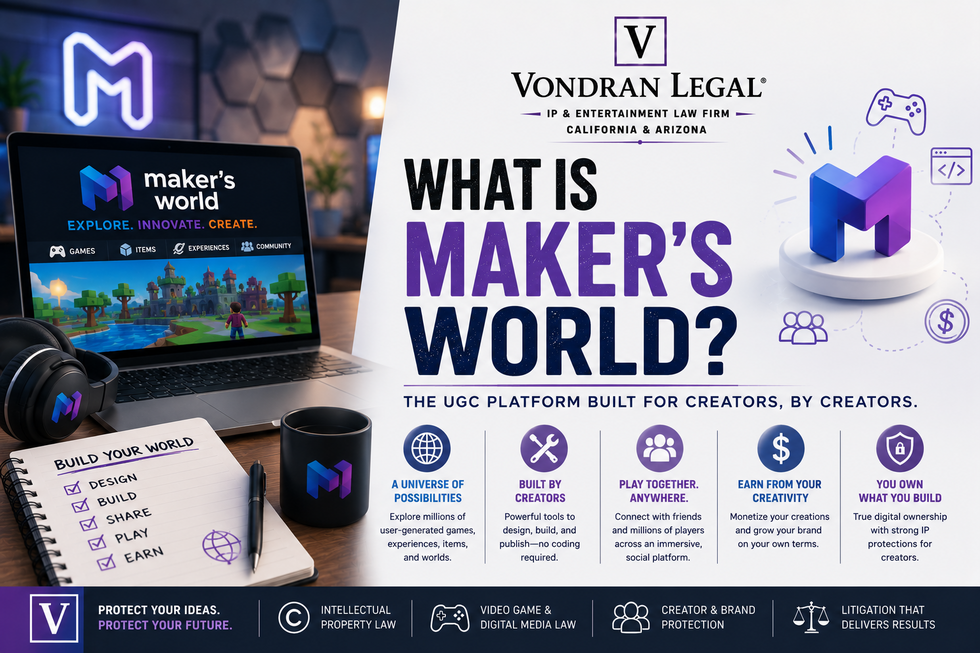
What Is MakerWorld?
MakerWorld is Bambu Lab's online marketplace and community where creators upload, distribute, and share 3D printable models for Bambu printers and other FDM printing systems.
The platform allows creators to:
- Publish original STL and CAD models
- Build an audience
- Earn rewards
- Offer commercial licenses
- Share printable designs
- Participate in contests
- Collaborate with the maker community
Like YouTube for video creators, MakerWorld serves as both a publishing platform and a discovery engine for digital designs.
Why Copyright Protection Has Become Such a Big Issue
One of the biggest problems facing digital designers today is unauthorized copying.
Examples include:
- Someone downloads your STL file and uploads it to another website.
- Your design appears on Etsy sold by someone else.
- Amazon sellers offer finished prints without authorization.
- Another platform republishes your files.
- A commercial seller bundles your models into subscription packages.
- Foreign marketplaces distribute your work for free.
Unlike physical products, digital files can be copied instantly.
MakerWorld recognizes this problem and has developed an enforcement program designed to help creators respond to infringement.
What Is the MakerWorld Exclusive Model Copyright Support Program?
The program provides copyright assistance for creators whose Exclusive Models have been copied without authorization.
Rather than merely offering a complaint form, MakerWorld may:
- help investigate infringement,
- assist in preparing complaints,
- coordinate takedown requests,
- work with third-party copyright enforcement agencies,
- monitor both MakerWorld and external websites for unauthorized copies, and
- verify originality through platform records such as upload timestamps and publication history.
This is a significant step beyond the passive approach many online platforms take.
Who Can Use the Program?
The current program is being rolled out gradually.
To qualify, creators generally must:
- upload an Exclusive Model,
- certify that the work is entirely original,
- confirm that it contains no third-party intellectual property, and
- meet MakerWorld's beta eligibility requirements, including minimum follower thresholds for certain users.
The platform notes that eligibility will likely expand as the program matures.
MakerWorld Covers Enforcement Costs—For Now
One particularly interesting feature is that MakerWorld currently states it covers the costs associated with its professional enforcement partners.
That includes labor and evidence-collection expenses involved in filing infringement complaints.
The company reserves the right to change this policy in the future, but at present, eligible creators generally do not pay for these enforcement services.
MakerWorld Still Wants You to Report Infringement Yourself
Although MakerWorld offers assistance, the platform strongly recommends that creators first report infringement directly to the offending website.
For example:
- report unauthorized models on competing model platforms,
- contact Etsy,
- contact Amazon,
- report infringing sellers directly.
MakerWorld even suggests filing reports simultaneously with both the platform and MakerWorld to maximize the chances of successful removal.
Success Is Never Guaranteed
One of the strengths of the FAQ is its realism.
MakerWorld openly acknowledges that copyright enforcement is:
- expensive,
- time-consuming,
- uncertain,
- dependent upon platform policies, and
- influenced by the quality of available evidence.
The FAQ specifically notes that MakerWorld is a platform—not a law firm—and cannot guarantee that infringing content will be removed.
This is an important reminder that even strong copyright claims can face procedural hurdles.
What Evidence Should Creators Preserve?
Perhaps the most valuable part of the FAQ is its discussion of evidence.
MakerWorld recommends maintaining:
- original CAD files,
- design sketches,
- source files,
- screenshots,
- creation process documentation,
- publication records,
- identity verification,
- copyright registrations (when available), and
- screenshots of infringing listings.
These materials can be critical when proving ownership and originality.
Why Social Media Can Strengthen Your Copyright Case
One particularly practical recommendation is to publish your designs not only on MakerWorld but also on major social media platforms.
MakerWorld suggests posting your models to:
- Facebook,
- Instagram,
- TikTok, and
- similar platforms.
Why?
Because timestamped public posts can help establish the chronology of your work and provide additional evidence of prior publication if a dispute later arises.
MakerWorld Uses Professional Copyright Enforcement Partners
Rather than handling every complaint internally, MakerWorld works with outside specialists.
The FAQ identifies partners including:
CopyrightShark
- DMCA takedowns
- web monitoring
- AI-assisted infringement detection
- search-engine removals
- hosting-provider complaints
Shanghai Guanyong Information Technology Co., Ltd.
- AI monitoring
- blockchain evidence preservation
- infringement tracking
- IP licensing services
These partnerships demonstrate that MakerWorld is investing in specialized copyright enforcement infrastructure.
Why Some Copyright Claims May Fail
Not every complaint results in removal.
MakerWorld identifies several common reasons:
1. Identity Problems
The creator cannot verify ownership or identity.
2. Missing Documentation
The creator lacks:
- source files,
- creation evidence,
- publication history,
- registration certificates.
3. Third-Party IP
The model contains copyrighted characters, trademarks, logos, or patented designs belonging to someone else.
4. No Actual Infringement
MakerWorld specifically notes that enforcement may fail where:
- there is no substantial infringement,
- the accused work qualifies as a licensed remix,
- platform reviewers reach a different conclusion.
That acknowledgement is significant because it recognizes that copyright disputes often involve questions about licenses and authorized derivative works—not just copying.
Copyright Registration Still Matters
Although copyright generally arises automatically upon creation in the United States, registration provides significant procedural advantages.
MakerWorld encourages creators to consider obtaining copyright registrations and provides links to registration authorities around the world, including:
- U.S. Copyright Office
- Canadian Intellectual Property Office
- Japan Agency for Cultural Affairs
- Korea Copyright Commission
- EUIPO
- UK Intellectual Property Office
- WIPO resources
The FAQ also explains the distinctions between copyright, trademarks, and design patents, helping creators choose the appropriate form of protection for different aspects of their work.
Don't Forget About Commercial Licensing
Many disputes arise not because people are printing models for personal use, but because they are selling finished products.
MakerWorld encourages creators who wish to authorize commercial sales to use its Commercial License program. Under that model, sellers can purchase a license before selling finished prints, creating a legitimate revenue stream for designers while reducing infringement disputes.
Practical Tips for 3D Model Creators
If you publish original designs online:
- Keep every version of your CAD and source files.
- Save sketches, prototypes, and work-in-progress screenshots.
- Register important works with the U.S. Copyright Office when appropriate.
- Publish your work on reputable platforms and social media to create a timestamped record.
- Monitor marketplaces for unauthorized copies.
- Use commercial licenses when allowing others to sell physical prints.
- Respond promptly to infringement and preserve evidence before content disappears.
How an Intellectual Property Lawyer Can Help
While platforms like MakerWorld provide valuable tools, they cannot replace legal counsel. An experienced intellectual property attorney can assist with:
- Copyright registration strategy
- DMCA takedown notices
- Counter-notice responses
- Licensing agreements
- Commercial license drafting
- Cease-and-desist letters
- Marketplace enforcement
- Copyright litigation
- International infringement issues
- Trademark and design patent strategy for 3D products
Many disputes involve complex questions of ownership, originality, licensing, fair use, or derivative works that require legal analysis beyond a platform's review process.
Final Thoughts
MakerWorld's Exclusive Model Copyright Support Program represents an important development in the evolving world of digital manufacturing and creator rights. By combining originality verification, professional enforcement partners, evidence-preservation guidance, and educational resources, the platform is taking a more proactive role in protecting designers than many content-sharing services.
That said, the program also underscores an important reality: successful copyright enforcement still depends heavily on the creator's own preparation. Maintaining detailed creation records, documenting publication dates, avoiding third-party intellectual property, and understanding the differences between copyright, trademark, design patents, and commercial licensing remain essential to protecting valuable 3D designs.
As 3D printing continues to grow into a multi-billion-dollar global industry, creators who invest in both strong documentation practices and sound legal strategies will be best positioned to protect their work and maximize its commercial value.
Need Help Protecting Your 3D Models or STL Files?
Vondran Legal represents designers, makers, software developers, artists, and digital creators in copyright registration, DMCA takedowns, licensing agreements, marketplace enforcement, and intellectual property litigation. Whether your 3D model has been copied, sold without authorization, or incorporated into another product, our firm can evaluate your legal options and help you protect your creative work. Contact us today to learn more about safeguarding your intellectual property in the rapidly evolving world of digital manufacturing.

